

By:
Paul Francoletti
Director of Product Sales – Mechanical
Published on:
February 2nd, 2026
Topics:
Subscribe now and get the latest blog posts delivered straight to your inbox.
By:
Paul Francoletti
Director of Product Sales – Mechanical
Published on:
February 2nd, 2026
Topics:

Ashcroft Critical Application Solution Experts® (CASE®) work with existing and prospective customers to identify process challenges and recommend pressure instrumentation solutions designed to mitigate risk and improve safety and reliability.
This CASE study highlights how an application-specific evaluation helped identify widespread gauge damage and improve pressure measurement reliability in a demanding petrochemical environment.
Customer / Application
A petroleum refinery using pressure gauges across a variety of petrochemical process applications, many of which are subject to extreme operating conditions.
Challenge
Several pressure gauges were providing inaccurate readings, including one gauge indicating 42 psi with no applied pressure. These inaccuracies raised concerns about gauge reliability, process visibility, and the potential for undetected instrument damage in critical applications.
Engineering Assessment
Ashcroft CASE® experts conducted an on-site pressure instrumentation audit over a two-day period, documenting each gauge and its associated process conditions. The assessment revealed frequent exposure to extreme service conditions, including elevated temperature, vibration, pressure pulsation, and physical damage.
The audit found that 17% of installed gauges exhibited signs of damage, such as discolored liquid fill, overpressure damage, liquid fill leaks, water ingress, broken windows, and loss of pressure containment.
Solution
Based on the audit findings, Ashcroft provided application-specific recommendations to address the identified failure modes and improve overall gauge reliability. The recommended solutions included:
-
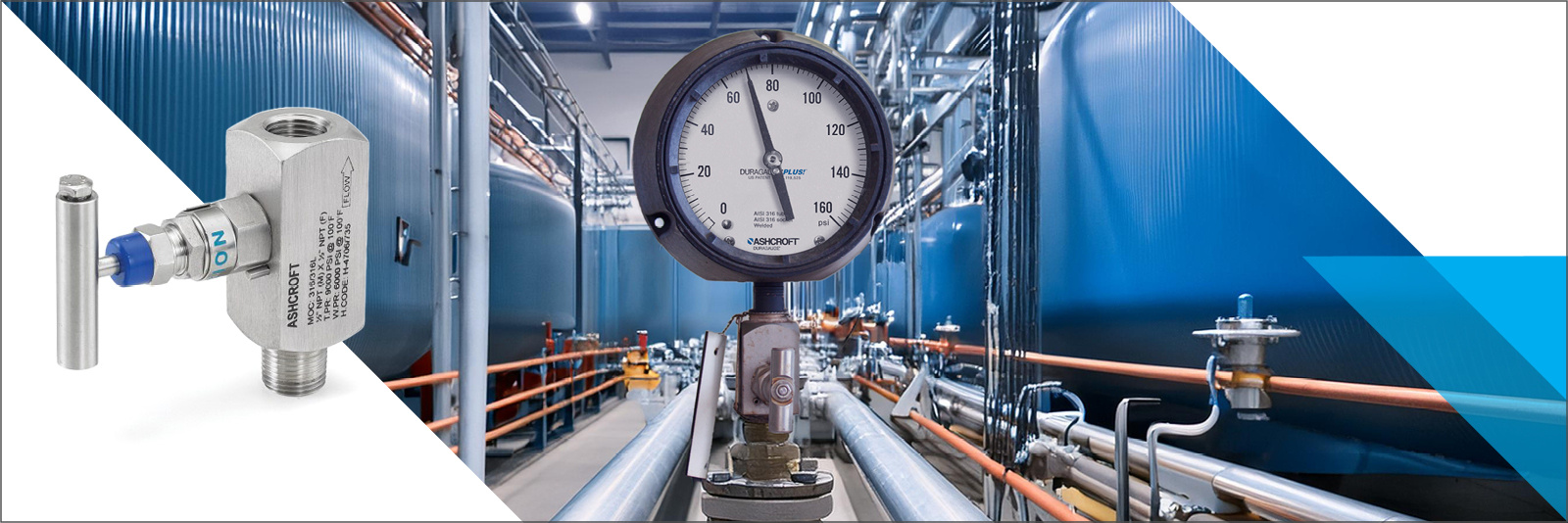
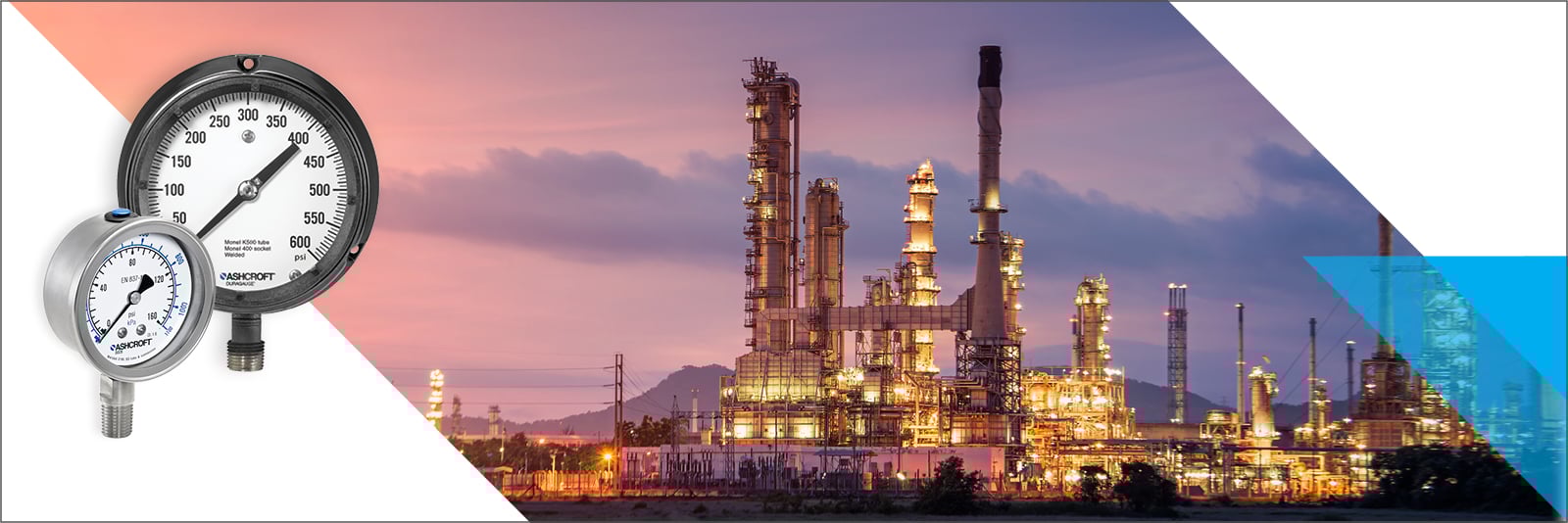
Replacing existing gauges with Ashcroft® PLUS!™ Performance gauges for most applications to dampen pulsation and vibration, eliminate liquid fill leakage and discoloration, and reduce overall gauge inventory
-
Adding pressure limiting valves (PLVs) to protect gauges from overpressure events exceeding proof pressure
-
Recommending IP66 weatherproof gauge cases with acrylic windows to help prevent moisture ingress and reduce the risk of window breakage
Result
The recommended solutions addressed the root causes of gauge failure, improved pressure measurement reliability in extreme service conditions, reduced maintenance and inventory requirements and helped restore confidence in gauge performance across the facility.
Key takeaway
Extreme service conditions require more than standard pressure gauges. Application-specific evaluation and properly configured instrumentation can significantly improve reliability and reduce the risk of failure.
Ashcroft CASE® experts work closely with customers to assess critical applications and recommend solutions tailored to their operating conditions.
To learn more, review the related resources below. If you have questions or would like to schedule a CASE® Audit, contact Ashcroft to speak with a Critical Application Solution Expert®. In the meantime, download our guide, How to Avoid Pressure Equipment Failure, for practical insights on identifying early warning signs and improving pressure instrument safety and reliability.
Topics: