

Subscribe now and get the latest blog posts delivered straight to your inbox.
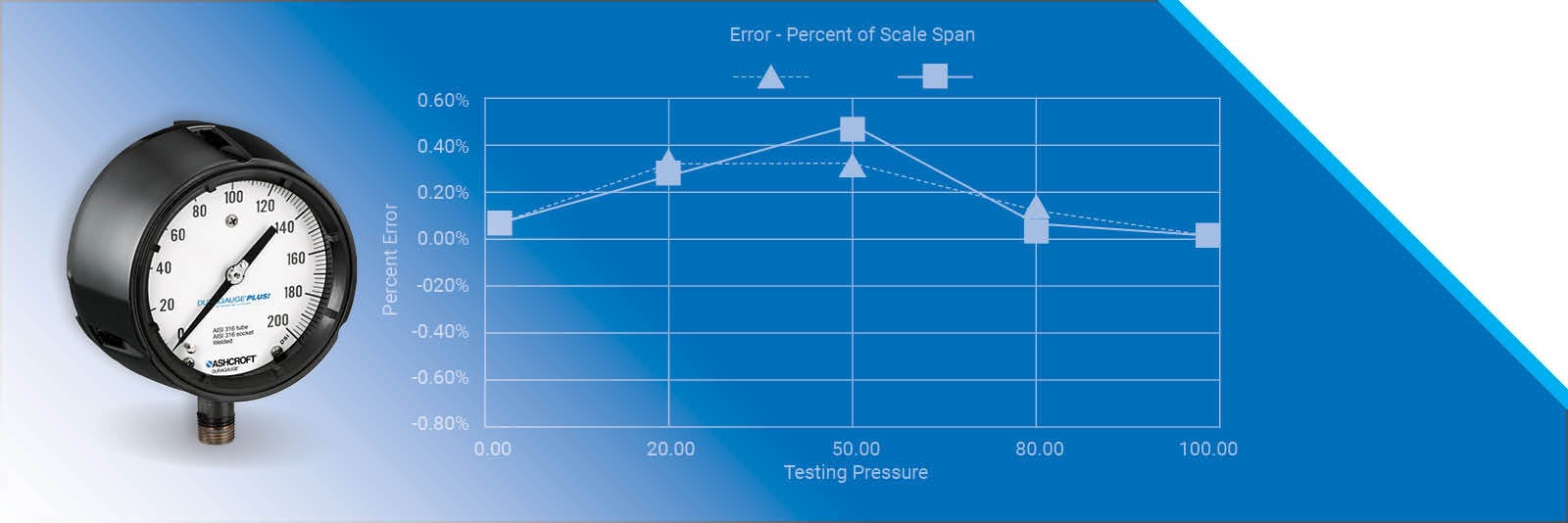
ASME accuracy grades were established in the American Society of Mechanical Engineers (ASME) B40.100 to define how closely a pressure gauge’s indicated reading matches the true pressure value. In simple terms, the accuracy grade tells you how much error you can expect in a gauge’s measurement, expressed as a percentage of span.
As a leader in pressure and temperature measurement, Ashcroft designs and manufactures pressure instruments in accordance with ASME B40.100, using its recommended accuracy grades as a benchmark for gauge performance.
Read this Understanding the Basics article to learn how ASME accuracy grades are expressed, what each grade means and how they are typically applied in industrial and calibration environments.
Why are ASME accuracy grades important?
ASME B40.100 is one of the primary standards governing pressure and vacuum gauges. ASME accuracy grades account for how gauge performance can vary across different portions of the dial. Understanding how ASME defines accuracy grades is essential when selecting a gauge for:
-
Process control
-
Safety-related applications
-
Calibration and verification activities
-
Compliance with customer or regulatory requirements
The explanations provided here are intended as a general overview of those classifications and their typical industrial use.
How are ASME accuracy grades expressed?
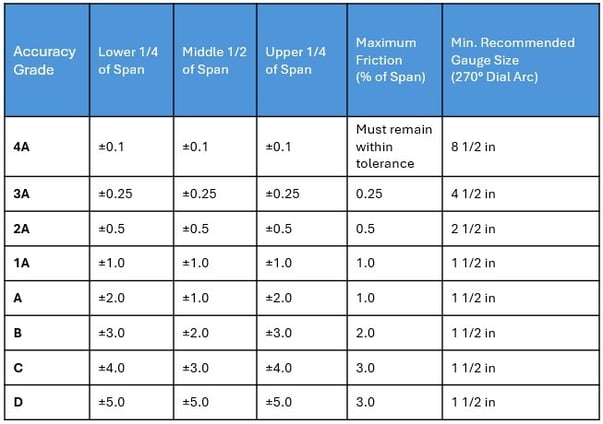
ASME grades are expressed as a percentage of the gauge’s span, defining the maximum allowable error of the indication. They may be expressed in one of two ways:
-
Single-number accuracy for the entire scale (e.g., ±1% of span)
-
Accuracy in the lower ¼, middle ½ and upper ¼ of the scale (e.g., ±2%, ±1%, ±2% of span)
This approach recognizes that mechanical pressure gauges are typically most accurate near the middle of their range.
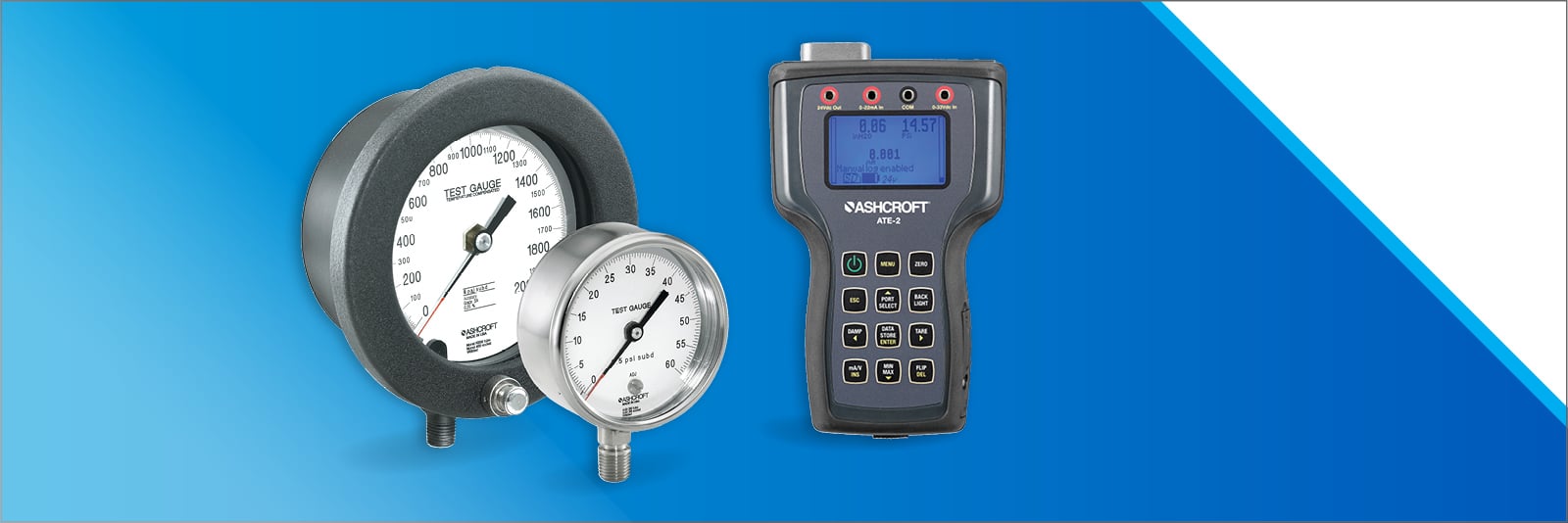
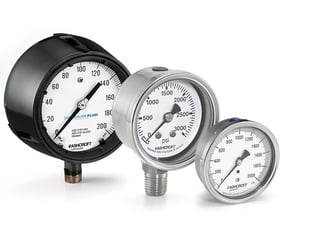
Figure 1. Ashcroft mechanical pressure gauges
What are some of the most common ASME accuracy grades?
ASME defines several commonly used accuracy grades, each indicating how much error is permitted across different portions of the gauge dial. Below is a summary of the most common and how they are typically used.
1. ±0.1% of span accuracy (ASME Grade 4A)
This is one of the highest accuracy levels available for mechanical pressure gauges and is generally reserved for reference-grade test instruments. It means the gauge indication will remain within ±0.1% of the span value across the entire dial.
Typical use cases include:
-
Laboratory or metrology environments
-
Primary reference standards
-
Calibration of other high-accuracy instruments
2. ±0.25% of span accuracy (ASME Grade 3A)
This grade balances excellent accuracy with greater durability than ultra-high-accuracy laboratory instruments. It means the gauge indication will remain within ±0.25% of span across the entire dial.
Typical use cases:
-
Secondary reference standards
-
High-accuracy test gauges
-
Critical process verification
3. ±0.5% of span accuracy (ASME Grade 2A)
This grade provides high confidence measurements while accommodating normal mechanical gauge behavior across the dial. It means the gauge indication will remain within ±0.5% of span across the entire dial.
Typical use cases:
-
Process applications
-
Industrial applications
4. ±1% of span accuracy (ASME Grade 1A)
This is a common choice for applications requiring reliable readings without the cost of higher-accuracy instruments. It means the gauge indication will stay within ±1% of the span across the entire range.
Typical use cases:
-
General industrial process measurement
-
OEM equipment
-
Utility and infrastructure systems
5. ±2% / ±1% / ±2% of span accuracy (ASME Grade A)
This accuracy grade is well-suited for everyday industrial use where moderate accuracy is acceptable. It means the gauge is most accurate near the middle of the scale, with reduced accuracy at the lower and upper portions of the scale:
-
±2% accuracy at the lower and upper ends of the scale
-
±1% accuracy across the middle of the scale
Typical use cases:
-
Standard process monitoring
-
Non-critical pressure indication
-
Applications where trend visibility is more important than tight tolerances
6. ±3% / ±2% / ±3% of span accuracy (ASME Grade B)
This grade emphasizes durability and readability over measurement precision. Accuracy varies between ±3% and ±2% of span, depending on the section of the dial.
Typical use cases:
-
Basic indication where precision is not critical
-
Generally used when a lower-cost option is needed
Figure 2. ASME B40.100 accuracy chart
Why does accuracy grade selection matter?
Selecting the correct ASME accuracy grade ensures the gauge provides meaningful, reliable readings without unnecessary cost or performance risk. It is about more than just choosing the tightest tolerance. Over-specifying accuracy can increase cost without improving performance, while under-specifying accuracy can lead to:
-
Poor process control
-
Failed audits or inspections
-
Incorrect calibration decisions
Key takeaway
ASME accuracy grades provide a standardized way to compare pressure gauges and ensure the instrument you select is appropriate for its intended use. By understanding how each grade is defined—and where it is typically applied—you can make more informed decisions that balance accuracy, durability and cost.
In future selections, accuracy grade should always be considered alongside range, materials of construction, environmental conditions and applicable standards.
Ready to learn more?
If you have questions about selecting the right accuracy grades for your application, contact us to speak with a product expert or explore related resources below regarding pressure gauge selection and calibration. In the meantime, check out the Ashcroft Pressure Gauge Selection Tool, designed to help you find the best instrument for your specific needs.