<img height="1" width="1" style="display:none;" alt="" src="https://px.ads.linkedin.com/collect/?pid=3882185&amp;fmt=gif">
Skip to main content
Paul Francoletti, Director of Product Sales – Mechanical's headshot

By: Paul Francoletti
Director of Product Sales – Mechanical

Published on:
January 26th, 2026

Protecting a Refinery’s HF Alky Unit

Print/Save as PDF

Paul Francoletti, Director of Product Sales – Mechanical's headshot

By: Paul Francoletti
Director of Product Sales – Mechanical

Published on:
January 26th, 2026

Ashcroft CASE(R) Study

Ashcroft Critical Application Solution Experts® (CASE®) work customers to identify process challenges and recommend pressure instrumentation solutions designed to mitigate risk and improve safety.

This CASE study demonstrates how an application-specific solution helped improve protection and reduce risk in a critical pressure measurement application. 

Customer / Application

A petroleum refinery operating a hydrofluoric acid (HF) alkylation unit. HF Alky units are used to convert isobutane and light olefins into alkylate for gasoline blending. These units involve highly hazardous process media and require stringent safety controls.

Challenge

Hydrofluoric acid is extremely corrosive and dangerous. In the event of a leak at the pressure instrument, HF can form a toxic vapor cloud, creating a serious safety risk for personnel and increasing regulatory and operational exposure.

Engineering Assessment

Ashcroft engineers conducted a site visit and reviewed the application and existing gauge configuration. The assessment identified a need for enhanced protection at the instrument interface to reduce the risk of HF leakage and improve operator awareness of seal integrity.

Solution

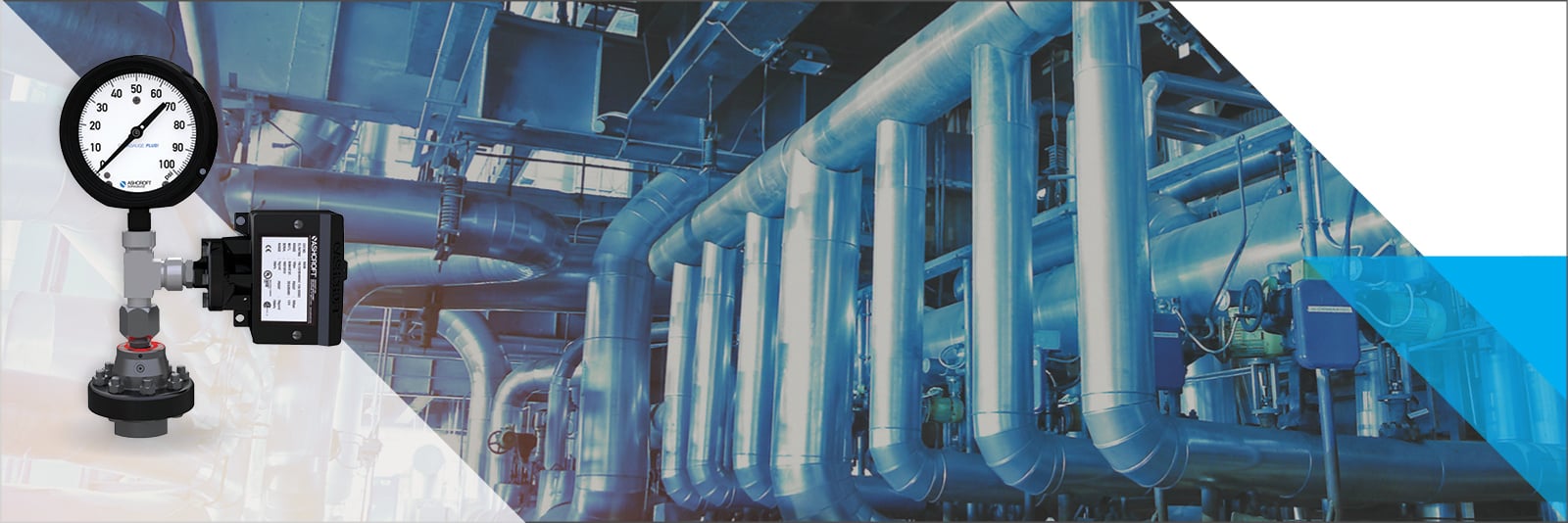
Ashcroft recommended a pressure gauge assembly incorporating an Acid Leak Detection (ALD) system designed specifically for HF service. The solution included:

  • A tamper-proof design with the gauge welded to the diaphragm seal

  • Visual indication to alert personnel of any leaking process media

  • Dual containment to provide an additional layer of protection

Result

The upgraded gauge assembly improved personnel safety by reducing the risk of HF exposure, enhanced leak detection at the point of measurement, and supported safer operation of the HF alkylation unit.

Key takeaway

Critical process applications involving hazardous media require more than standard instrumentation. Application-specific evaluation and engineered solutions can significantly reduce risk and improve personnel safety at the point of measurement.

Ashcroft CASE® experts work closely with customers to assess critical applications and recommend solutions tailored to their operating conditions.

To learn more, review the related resources below. If you have questions or would like to schedule a CASE® Audit, contact Ashcroft to speak with a Critical Application Solution Expert®. In the meantime, download our guide, How to Avoid Pressure Equipment Failure, to learn practical strategies for improving pressure instrumentation reliability and safety.
How to Avoid Pressure Equipment Failure

Paul Francoletti, Director of Product Sales – Mechanical

Paul Francoletti has been with Ashcroft since 2008 and brings extensive experience across EPC and Product Management roles. Throughout his career, he has worked closely with sales teams, channel partners, affiliates, and manufacturing operations to support customer needs and business growth. Paul has also authored numerous educational blog articles, helping readers better understand process and industrial pressure measurement solutions and their real-world applications.

Related Articles

What is a Test Gauge

What Is a Test Gauge and When Do You Need One?

January , 2026|4 min. read
What is a Bellows Pressure Gauge

What is a Bellows Gauge?

November , 2025|2 min. read

Factors for Choosing the Right Pressure Transducer for Ammonia Refrigerant Systems

November , 2025|5 min. read

Product Review: Stainless Steel Pressure Gauge with Removable Bayonet Ring

August , 2025|3 min. read

Can Pressure Tubing Length Affect My Low-Pressure Transducer?

August , 2025|3 min. read

Measuring Pressure in Cryogenic Applications

August , 2025|3 min. read

How to Select the Right Pressure Gauge Pointer Type?

August , 2025|4 min. read

Product Review: GXLdp Differential Pressure Transducer

July , 2025|3 min. read
Pressure Instruments for Pharmaceutical and Biotechnology Applications

Pressure Instruments for Pharmaceutical and Biotechnology Applications

June , 2025|4 min. read
Ashcroft E2 Pressure Transducer for Vulcanizing & Other Hydraulic Applications

Pressure Transducers for Vulcanizing in Tire Manufacturing and Hydraulic Applications

April , 2025|4 min. read

What Causes Offset in the Output of a Transducer at Zero and Span?

April , 2025|5 min. read
Diaphragm seals for low pressure applications

Considerations for using a diaphragm seal in low-pressure applications

April , 2025|5 min. read
Pressure Gauge Oxygen Cleaning Service

Benefits of Cleaning for Oxygen Service

March , 2025|3 min. read

Top 5 Must Have Hydraulic Pressure Gauge Features

March , 2025|5 min. read

What’s the Right Pressure Instrument Mounting Assembly for Me?

March , 2025|5 min. read

Do Pressure Gauge Accessories Affect Accuracy?

February , 2025|5 min. read

Protecting Monel Pressure Gauges from Stress Corrosion Cracking in Hydrofluoric Applications

February , 2025|3 min. read
Digital vs. Analog Pressure Gauge

Digital vs. Mechanical Pressure Gauges

January , 2025|3 min. read

Choosing Pressure Measurement Instruments for the Chemical Industry

January , 2025|4 min. read

Choosing a Pressure Switch: 9 Factors to Consider

December , 2024|4 min. read
Ashcroft Diaphragm Seals

Reasons to Use a Diaphragm Seal or Isolation Ring

November , 2024|5 min. read

Choosing a Low-Pressure Transducer for Critical Environments

November , 2024|4 min. read

Using Pressure Switches to Trigger Alarms or Process Shutdown

October , 2024|4 min. read

Three Components of Pressure Calibration for Critical Process Instruments

October , 2024|4 min. read