

Subscribe now and get the latest blog posts delivered straight to your inbox.

A bellows gauge is a mechanical instrument designed to measure very low pressures or vacuum conditions. It operates using a thin-walled, accordion-like bellows that expands and contracts in response to pressure changes. This motion is transmitted through a mechanical linkage to a pointer, providing an accurate pressure reading even in extremely low ranges.
Without a bellows-type design, small changes in low-pressure systems—such as in air, gas, or liquid level monitoring—can be difficult to detect. In these applications, bellows gauges deliver the sensitivity and accuracy required to maintain stable process conditions.
Ashcroft is a global leader in pressure and temperature measurement instrumentation. This article is part of our Understanding the Basics series. Read it to learn how bellows gauges work, when to use them and what makes them essential for certain low-pressure applications.
How does a bellows gauge work?
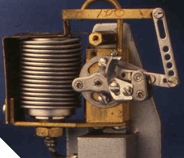
This type of gauge uses a bellows-actuated mechanism, which is a flexible metal chamber with deep folds that expand or contract as pressure changes. The bellows movement is transferred through a linkage and gear system to a pointer, which displays the pressure reading on the dial.
The bellows element functions similarly to a diaphragm-type sensor, but it operates with a different motion. Instead of flexing side to side, the convoluted metal walls expand and contract vertically (up and down) as pressure increases or decreases. This design provides a larger, more linear deflection—making it especially effective for detecting very low pressures or vacuum levels.
Figure 1. Bellows technology.
Because of this high sensitivity, bellows gauges are ideal for measuring low positive, negative (vacuum), or compound pressures. These pressures often range from 10 inches of water (≈0.36 psi) up to 10 psi.
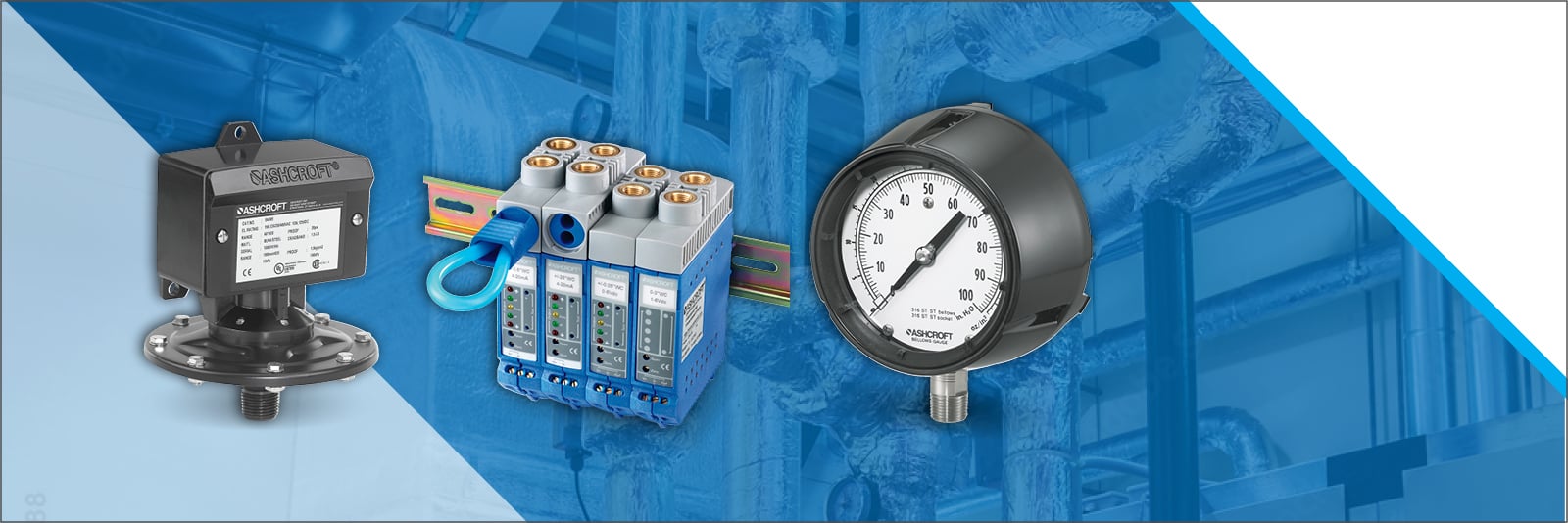
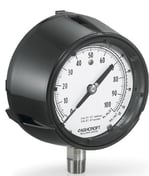
One example is the Ashcroft® 1188 Low-Pressure Bellows Gauge, which includes:
- A micrometer-adjustable pointer for precise calibration and zeroing
- Overpressure protection up to 5× the full-scale range, helping prevent damage from system spikes
- Solid-front safety case design, enhancing operator protection
Figure 2. Ashcroft® Low-Pressure Bellows Gauge
Where are bellows gauges used?
You’ll find bellows gauges in any system where maintaining and monitoring very low pressures is critical. These include:
- Water and wastewater pressure control systems
- Gas and air flow measurement
- Tank level monitoring
- Chemical, petrochemical, and oil & gas facilities
- Process and industrial equipment skids
In these environments, even small variations in pressure can affect product quality, process safety, or energy efficiency. A bellows gauge helps operators detect these minute changes quickly and reliably.
What makes a bellows gauge different from other gauges?
While other mechanical gauges, such as Bourdon tube or diaphragm gauges, measure medium to high pressures, a bellows gauge is built for precision at the low end of the pressure spectrum.
Key differences include:
- Sensitivity: Bellows provide a larger deflection per unit of pressure compared to Bourdon tubes.
- Low-pressure capability: Ideal for applications under 10 psi or as low as 10 inches of water.
- Material versatility: Available in brass, 316 stainless steel, or Monel® for compatibility with various media.
- Customization options: Can be fitted with diaphragm seals, capillary lines, or snubbers for improved performance in demanding conditions
These design advantages make bellows gauges well-suited for delicate measurement tasks where precision, safety and material compatibility matter most.
Ready to go beyond the basics?
Now that you have a basic understanding of bellows gauges and their applications, you may be ready to explore related topics in low-pressure measurement. Here are a few helpful resources to learn more:
- How Much Do Pressure Gauges Cost?
- Choosing the Right Pressure Gauge Dial Size
- How to Check the Calibration of a Pressure Gauge?
- 10 Steps to Selecting Your Pressure Gauge
Contact us to speak with a product expert if you have any questions. In the meantime, check out our pressure gauge selection tool to help you find the best instrument for your needs.