

Subscribe now and get the latest blog posts delivered straight to your inbox.
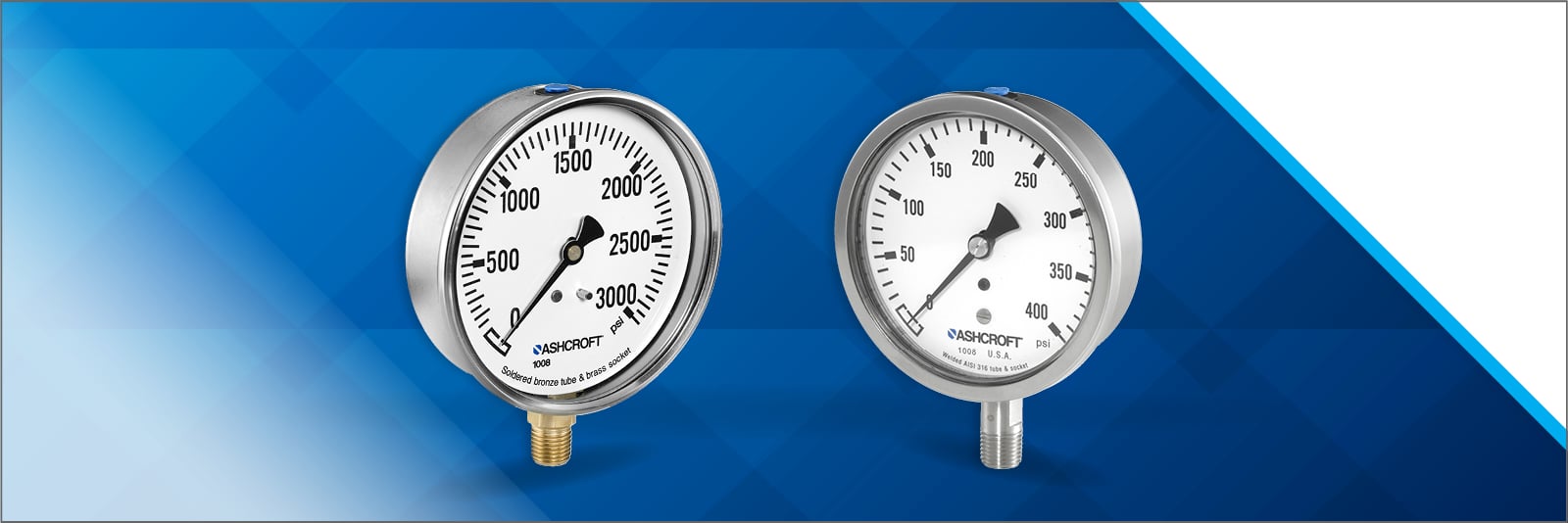
Material compatibility in pressure instrument selection matters because even well intended material upgrades can introduce hidden risks when components interact in real process environments. For example, stainless steel components are often considered the best choice in new systems when corrosion resistance is vital. But when you use it as a direct replacement for brass or bronze in mixed-metal assemblies without considering compatibility, you may be inviting a less visible problem: galvanic corrosion.
At Ashcroft we regularly work with engineers and operators to choose the most compatible instrument materials for their specific systems and applications. Read this article to learn how galvanic corrosion develops, why stainless steel is not always the right replacement choice and what to check when evaluating material compatibility in pressure instrumentation.
What is galvanic corrosion?
Galvanic corrosion (also called dissimilar-metal corrosion or bimetallic corrosion) happens when two dissimilar metals come into contact and are exposed to an electrolyte, such as moisture, water, condensation or a salty environment. When this happens, one metal acts as the anode and starts to lose material (corrode), while the other acts as the cathode and is relatively protected.
In the context of instrumentation (pressure gauges, sensors, diaphragm seals, fittings, etc.), if you replace a brass or bronze component with stainless steel in a system where the other mating material remains brass/bronze (or vice versa), you could unintentionally create a galvanic couple. Over time, that leads to failure, leaks, downtime and extra cost.
Why stainless is preferred in some cases, but not all
To be clear, stainless steel (particularly the higher grades such as 304 and 316 used at Ashcroft) is often selected for instrumentation because of its corrosion resistance, strength and durability. In systems designed with compatible materials, stainless steel can provide long service life and reliable performance.
That corrosion resistance, however, depends on how stainless steel interacts with the surrounding materials and environment. When stainless steel is introduced into assemblies that already contain brass or bronze, it may not perform as expected and can contribute to accelerated corrosion of the copper alloy components.
How stainless-steel upgrades can accelerate corrosion in mixed metal assemblies
As discussed earlier, stainless steel replacements are not always the right choice in systems that already contain brass or bronze components. In mixed-metal assemblies with brass or bronze, the copper alloy side of the connection is more likely to be the material that gives up metal and degrades first.
Some key risk factors include:
Electrolyte presence: Moist or wet environments (humidity, water, condensate, salt) dramatically increase corrosion risk.
Surface-area ratio: A small brass/bronze component electrically connected to a much larger stainless surface will tend to corrode faster.
Design or isolation gaps: Designs that allow direct metal‑to‑metal contact, without insulating or isolating dissimilar materials, increase the likelihood and rate that galvanic corrosion will occur.
Factors to consider before upgrading to stainless steel instrumentation
When you are evaluating whether a stainless-steel upgrade is a fit, or whether it makes more sense to stay with brass or bronze, you will want to look at the full assembly rather than a single component. Material compatibility depends on how all wetted materials interact with each other and with the operating environment.
Begin by identifying all wetted materials in the assembly and the specific alloys involved, such as brass, bronze, copper or the stainless-steel grade. Then, do the following:
- Inspect the environmental conditions
- Is the assembly exposed to moisture, condensation, salt or other chemical electrolytes?
- Is there adequate drainage, drying or ventilation?
- Are there cyclic wet and dry conditions that could accelerate corrosion?
- Ensure electrical isolation or barriers where practical
Nonconductive gaskets, sleeves, coatings or dielectric unions can interrupt the electrical path between dissimilar metals and reduce corrosion risk - Choose alloy upgrades thoughtfully
If an upgrade is required, select materials that are closer in galvanic potential rather than defaulting to stainless steel without evaluating compatibility - Leverage existing guides and tools
Use Ashcroft's material selection and corrosion guide to support pressure instrumentation decisions.
What to do when stainless steel is not the right material choice
If your assessment shows that a stainless-steel upgrade is not appropriate, there are several alternative strategies you can consider:
- Continue using brass or bronze for the wetted component. Be sure the rest of the process assembly materials and environment are compatible.
- Select a stainless-steel grade that is compatible with the brass/bronze component and operating conditions, with assembly design oversight.
- Use isolating components such as dielectric unions, insulating washers, gaskets or coatings. These instruments and accessories allow you to use stainless steel in portions without creating a galvanic cell.
- Ensure drainage or ventilation so moisture does not remain in contact with dissimilar metals.
- Design for serviceability by planning inspection, maintenance and replacement intervals where corrosion risk exists.
- Ensure engineers, maintenance personnel and purchasing teams understand that upgrading to stainless steel is not a universal solution and must be evaluated as part of a broader material compatibility strategy, particularly in process, OEM and critical applications.
Summary: stainless steel is an excellent material, but compatibility is paramount
Stainless steel can bring rugged, corrosion-resistant performance to pressure instrumentation, but assessing the material of a new instrument is only part of the equation. When stainless steel is introduced into a system that already contains brass, bronze or other copper-based alloys without evaluating galvanic compatibility, those copper alloy components can become vulnerable to accelerated corrosion and premature failure.
Rather than asking only what can be replaced with stainless steel, it is important to consider what the new material will come into contact with and the environment in which it will operate. Understanding the full material path, exposure to moisture or electrolytes and how components are connected helps prevent unintentionally creating a galvanic couple.
By asking these questions and using material selection tools, corrosion guides and appropriate isolation techniques, engineers can make informed material decisions that support long term performance rather than instrumentation that degrades quietly over time.
Ready to learn more?
With a better understanding of material compatibility and how important it is when replacing instruments in your process or application, you are in a better position to make an informed decision for your specific needs. Be sure to read related articles listed below about selecting pressure and temperature instrumentation.
If you have additional questions, please contact us and an instrument expert can give you the answers you seek. In the meantime, you can download our Complete Assembly Guide to learn more.