
.jpg?width=50&height=50&name=Pennell%20john%20(002).jpg)
Subscribe now and get the latest blog posts delivered straight to your inbox.
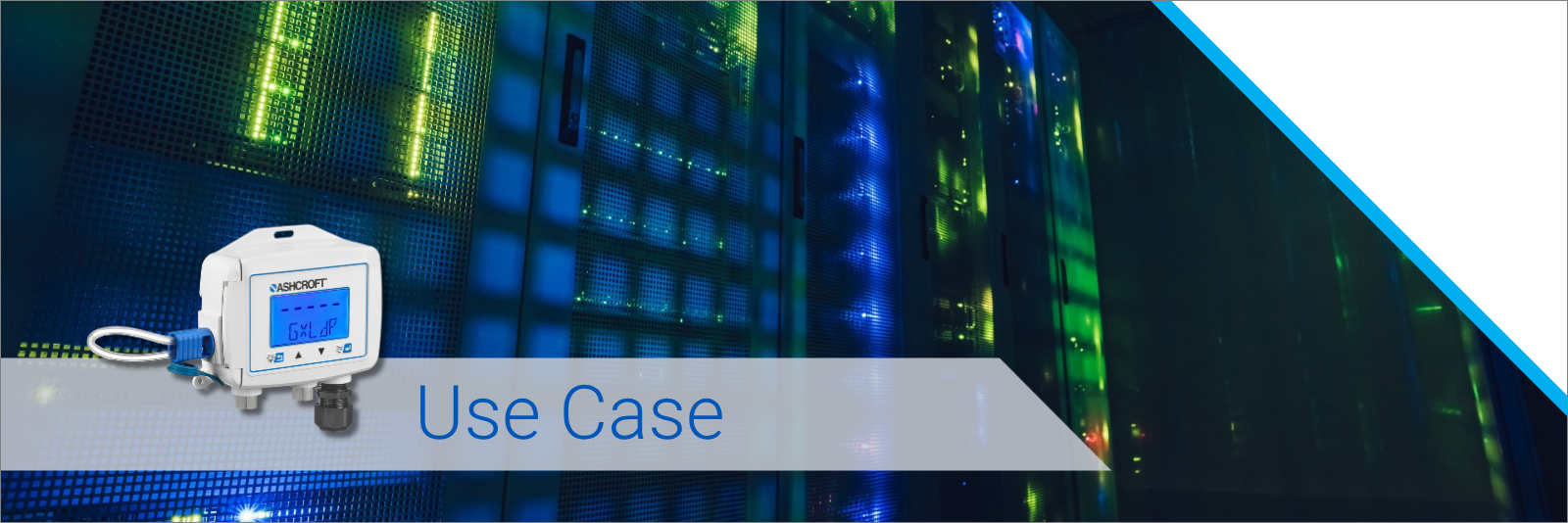
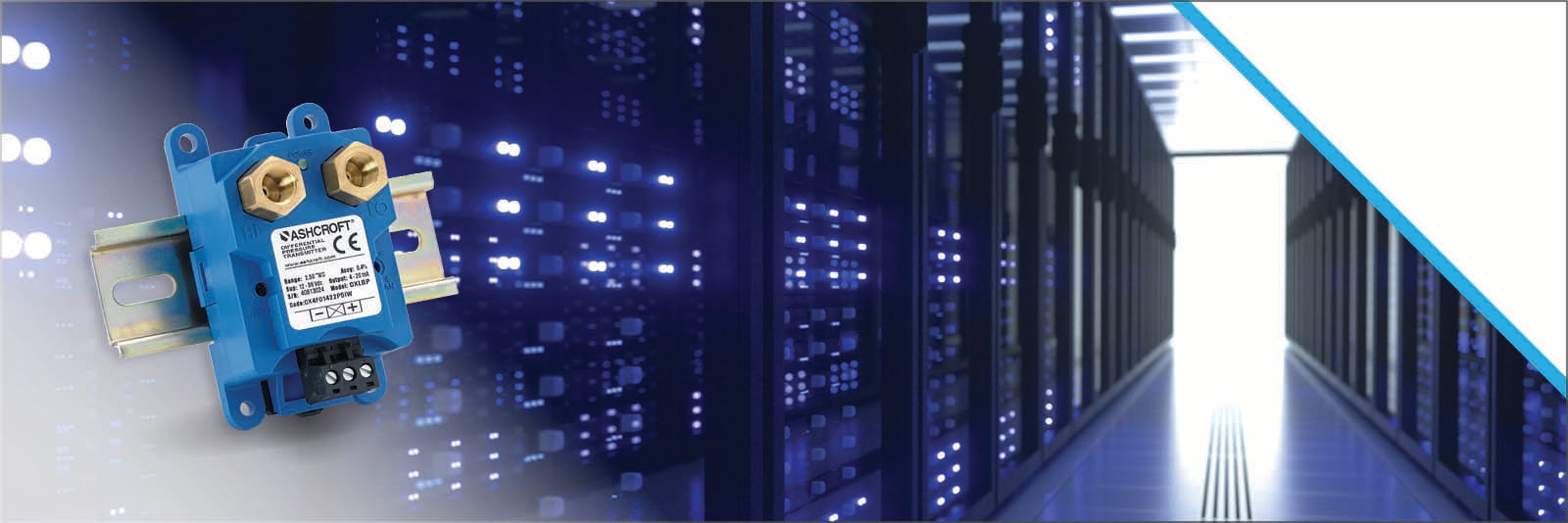
Accurate low differential pressure measurement helps data centers maintain proper airflow, temperature control and cooling efficiency across critical areas of the facility.
This Use Case demonstrates how a company identified accuracy errors and stability concerns with the low differential pressure sensors in its data center cooling system and selected an alternative solution designed to improve measurement accuracy, stability and in-place calibration.
Customer / application
A global technology company operating data centers in multiple locations relies on low differential pressure sensors to monitor airflow and building pressure in critical cooling applications. These instruments support hot aisle/cold aisle design and temperature control across the facilities.
Over time, the customer became concerned that the current sensors were not providing the reliable measurements required for consistent control. After observing instability, sometimes referred to as drift, the customer began evaluating whether the original sensors were right for the application.
Challenge
The original differential pressure sensors were producing measurement errors outside the acceptable tolerance for the application, with some errors reported above 1% of the required accuracy. These errors required facility technicians to repeatedly check and often re-zero the sensors in question.
Before replacing sensors across multiple facilities, the customer needed to identify a reputable supplier and a solution that could:
- Provide greater measurement stability and repeatability
- Maintain the required accuracy for the specified pressure range
- Include a local display
Customer assessment
The assessment determined that the existing differential pressure sensors used a multi-range design that allowed different measurement ranges to be selected from a single instrument. While this provided one inventory choice for multiple applications and installations, any deviations or errors related to zero stability, accuracy and temperature could potentially be magnified when changing ranges.
The customer’s concern about persistent errors and observed drift reduced its confidence in the airflow measurements and its ability to accurately control the application.
This degree of inaccuracy or instability may be acceptable in some general HVAC applications. However, for this critical measurement, it did not meet the level of performance needed to support reliable airflow control.
Solution
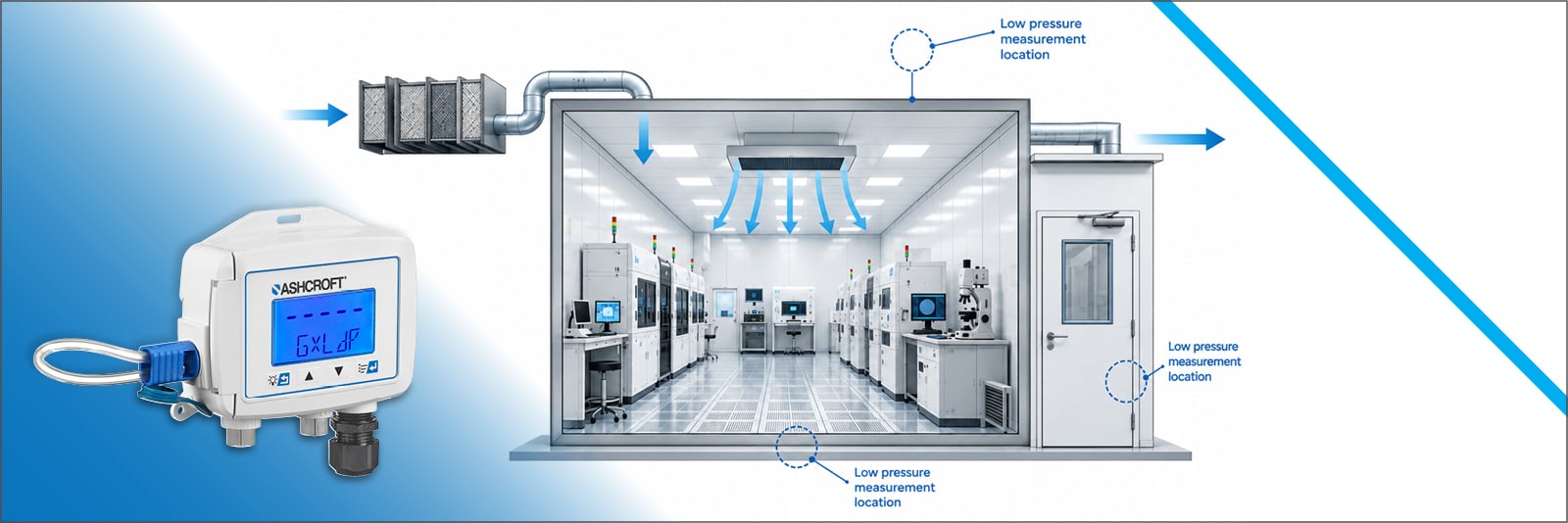
Based on the application requirements identified during the assessment, the customer tested an Ashcroft® GXLdp Differential Pressure Transducer specifically selected for the required operating range. The solution was designed to provide accurate, stable measurement and the local indication originally requested for the data center environment.
Although calibration and installation were not part of the customer’s original request, the assessment revealed an additional opportunity to improve the existing system.
The instrument's SpoolCal® feature provides in-place calibration, allowing a technician to easily calibrate the transducer without disconnecting it from the process.
The recommended approach also included:
- Application-specific measurement range: The transducer was selected for the required operating range to support consistent accuracy, repeatability and long-term stability.
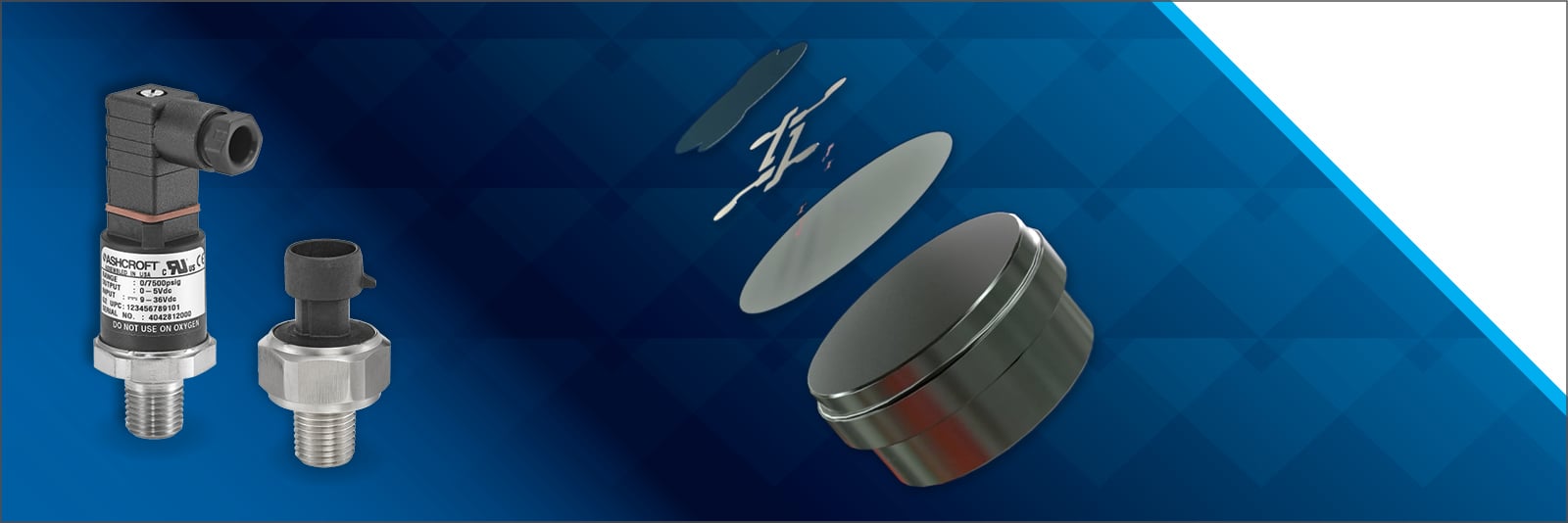
- Si-Glas™ sensor technology: The sensor uses an ultra-thin, single-crystal silicon diaphragm without glues or other organic materials in the sensing element, helping support long-term stability and repeatability.
- Integrated display: A local display allowed facility personnel to view measurements directly at the installation point.
The in-place calibration capability simplifies installation by eliminating multiple tubing connections, external shutoff valves and several potential leak points required to isolate instruments for calibration and service.
Result
After testing the recommended instrument, the customer standardized on the GXLdp, a single-range design with a display, for these applications across its global data center operations.
The stability and repeatability of Si-Glas™ sensor technology addressed the performance concerns identified during the assessment. In addition, the GXLdp’s SpoolCal feature provided simple in-place calibration and performance verification capabilities that were beneficial for both new and retrofit installations.
By selecting an instrument better matched to the application, the customer improved confidence in its differential pressure measurements while simplifying future calibration and service requirements.
Key takeaways
When evaluating low differential pressure instrumentation for airflow control in a data center, consider how the sensor technology, calibrated range and installation requirements may affect long-term performance:
- Zero stability and repeatability: Select sensor technology that maintains an extremely stable zero and performs reliably across its calibrated temperature range. Instability at zero differential pressure can lead to measurement errors and more frequent maintenance and recalibration.
- Range-specific calibration: Confirm that the instrument is calibrated specifically for the application’s required pressure range. Keep in mind that an installed sensor’s performance is typically calibrated to the sensor’s primary or intended range.
- Single-range or multi-range design: It’s best to consider a single range option when choosing a low-pressure sensor. However, if choosing a multi-range product, it is extremely important to understand how accuracy, zero stability, and temperature effects may change across the selected ranges.
- Calibration requirements: Determine how frequently the instrument must be re-zeroed or recalibrated and whether calibration requires process isolation or removal of the instrument.
- Application features: Confirm whether the application requires a local display or in-place calibration capability.
- Installation across facilities: Consider the installation and maintenance impact of deploying the same instrument across multiple facilities.
Learn more
Selecting a low differential pressure sensor with the range, performance and calibration capabilities that match your needs can help technicians maintain confidence and reduce potential risks to cooling system performance.
Explore the critical environment resources below to learn more about differential pressure measurement, data center cooling applications and in-place calibration. Contact us if you have questions about the requirements of your application.