

Subscribe now and get the latest blog posts delivered straight to your inbox.
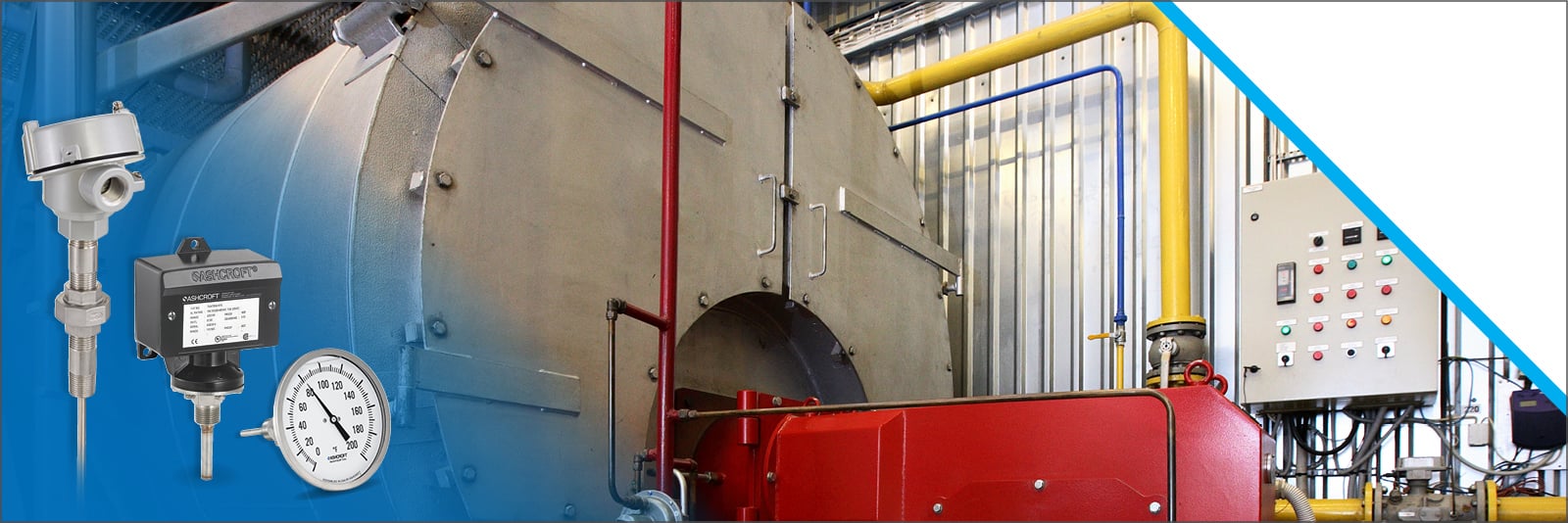
Steam is unlike most media measured in an industrial process. It operates at high temperatures, cycles frequently, and has a direct, predictable relationship between pressure and temperature.
If you have read our articles on how media temperature affects pressure transducer performance or protecting pressure gauges with steam siphons, you already know that steam can place greater demands on an instrument than water or air. This article looks at the temperature side of the equation, including how to select the right sensor, indicator or switch for a steam system.
What makes steam different from other industrial processes?
Steam is demanding because it combines high heat with constant, pressure-driven temperature changes.
-
Saturated steam remains at a specific saturation temperature for a given pressure. If the steam remains saturated, a change in pressure produces a corresponding temperature change.
-
Superheated steam operates above the saturation temperature for its pressure. It is commonly used in dry, high-pressure and high-energy applications, including steam-turbine power generation.
Steam systems also cycle frequently. Steam traps open and close, boilers ramp up and down, and condensate forms and re-evaporates. As a result, temperature instruments in steam service must withstand thermal cycling and occasional thermal shock rather than simply measuring a steady process temperature.
This combination of heat, pressure sensitivity, and cycling makes steam instrument selection different from selection for cooler, more stable applications.
How does the pressure and temperature relationship affect instrument selection?
Because the temperature of saturated steam is tied directly to its pressure, you can estimate the operating temperature of a steam line from its pressure setpoint. This relationship should guide temperature range selection before you evaluate a specific instrument.
The chart below is based on standard saturated steam property data. It illustrates how temperature changes with pressure across the curve.
Figure 1. Saturated Steam Pressure and Temperature Relationship
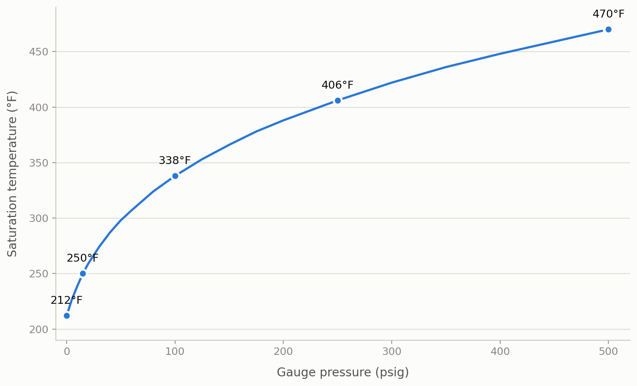
At 0 psig, saturated steam is approximately 212 °F. At 15 psig, which is common in sterilization and low-pressure heating loops, the temperature increases to approximately 250 °F. At 100 psig, it reaches about 338 °F, and at 250 psig, it exceeds 400 °F.
The National Institute of Standards and Technology’s thermophysical properties reference provides a nonproprietary source for the complete data set when detailed design calculations are required.
The key consideration is that the effect of a pressure change depends on where the system operates along the pressure-temperature curve. Instrument range and accuracy should therefore be based on the system’s actual operating pressure, expected pressure variation and corresponding steam temperature.
When should you use an RTD or thermocouple in steam service?
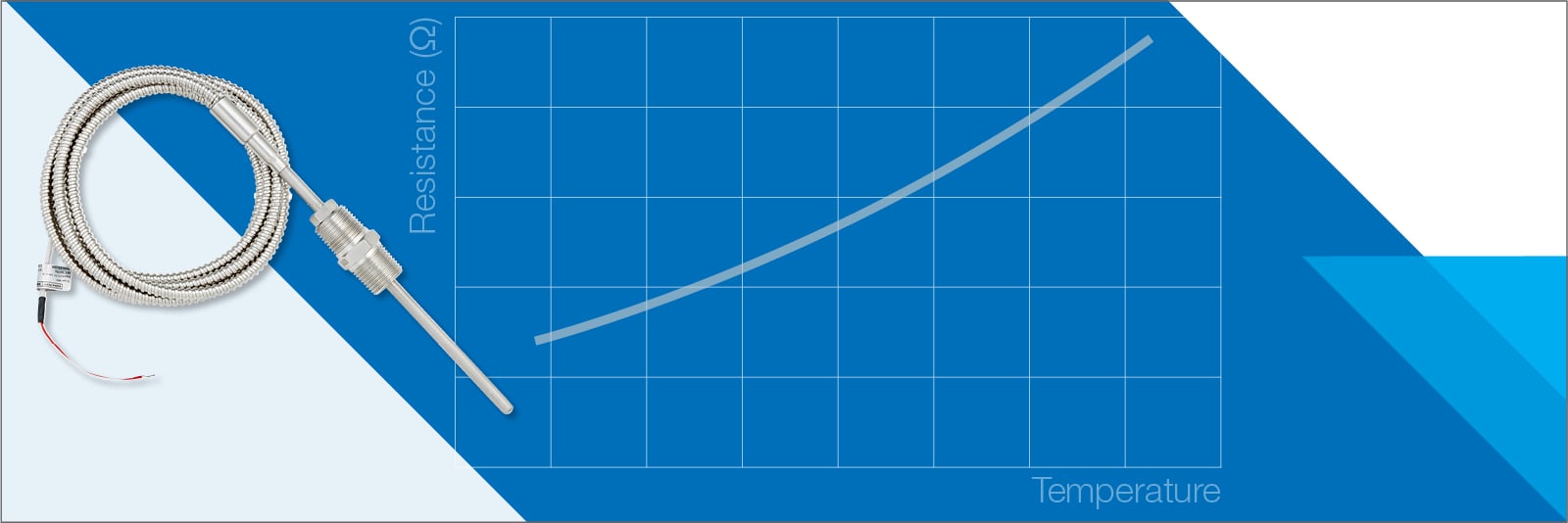
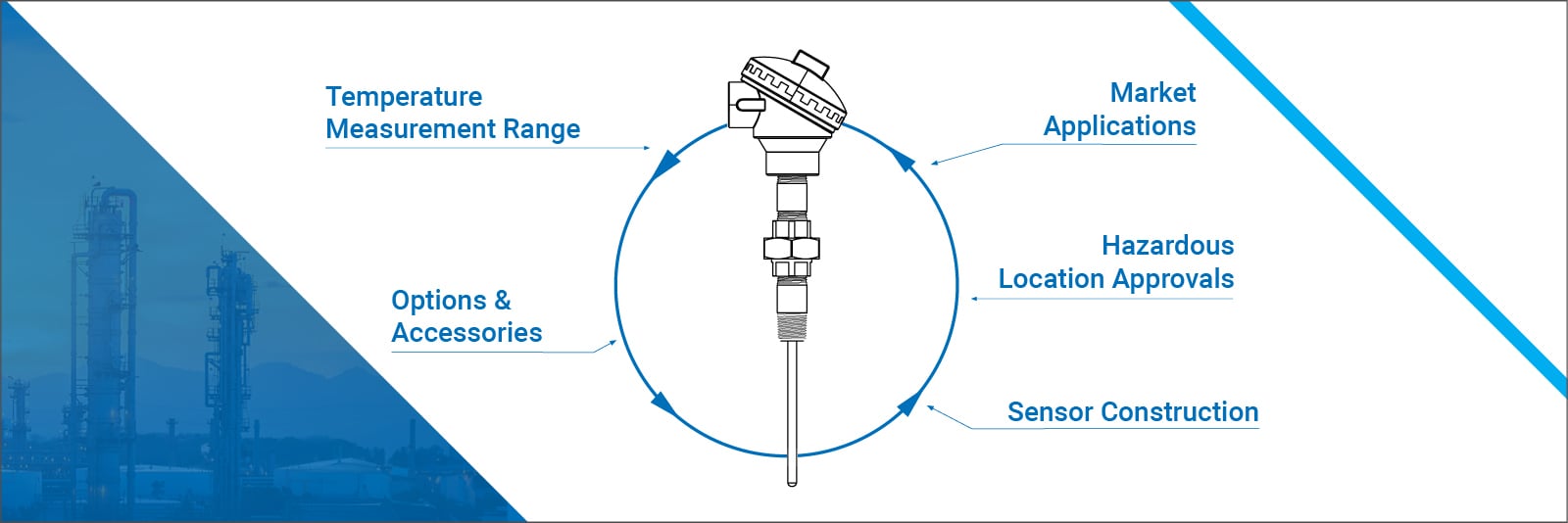
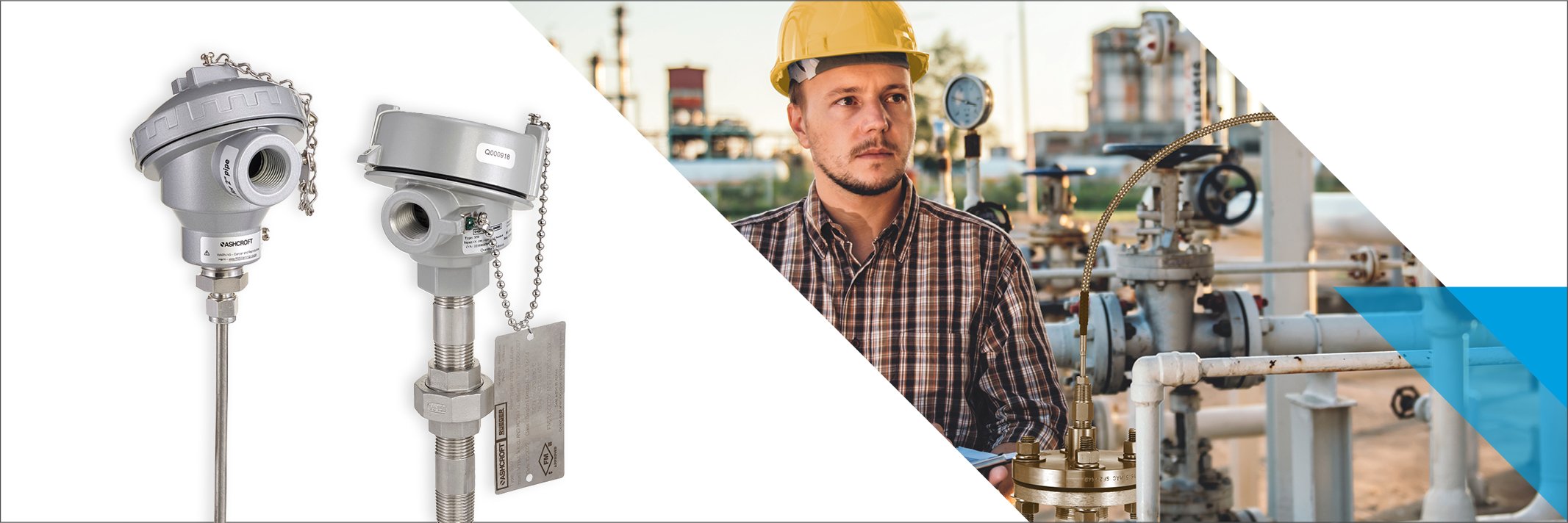
Resistance temperature detectors (RTDs) and thermocouples are used when a steam application requires continuous process temperature data rather than a local visual reading. Common applications include boiler headers, superheated steam lines, and steam-to-process heat exchangers.
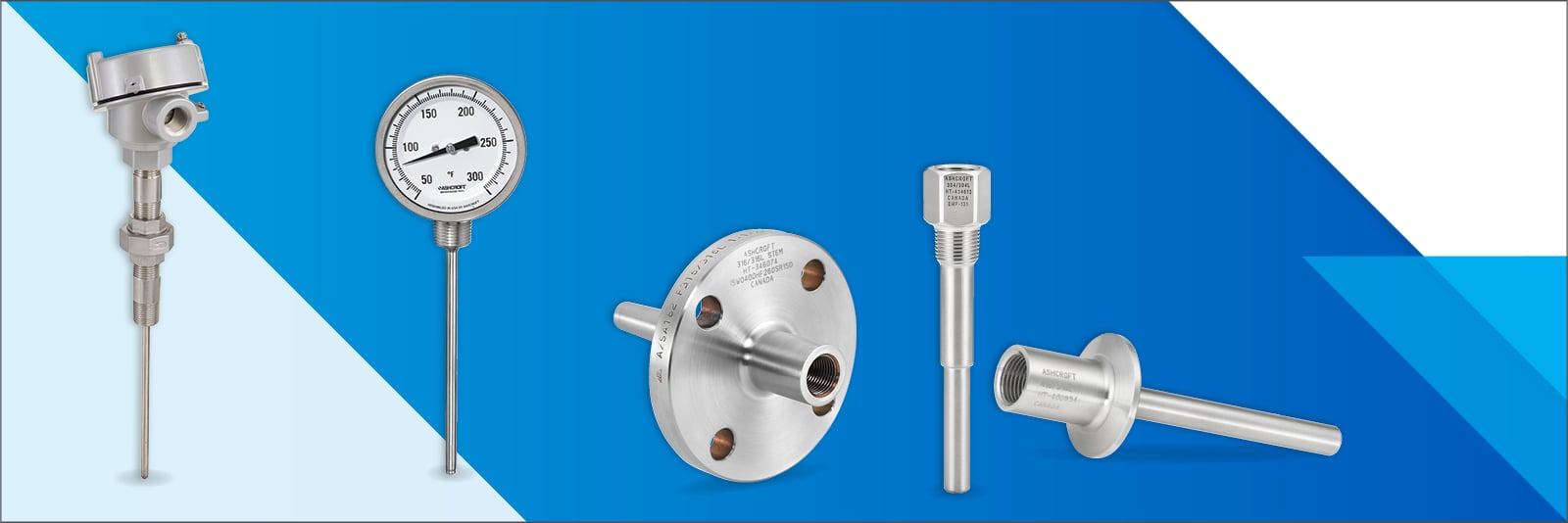
The Ashcroft® S50 Temperature Sensor is one example of how these two sensing technologies can serve different operating requirements.
- RTDs: Pt100 or Pt1000 RTDs with a Platinum 385 curve can cover temperatures from -196 °C to 600 °C. Accuracy classes include Class A, B, and AA in accordance with IEC 60751. This combination of range, accuracy, and repeatability makes RTDs well-suited for saturated steam and moderate superheat applications.
- Thermocouples: Thermocouples provide a wider measurement range. A Type K thermocouple, for example, can be rated for temperatures up to 1,200 °C. This makes it a better choice for high-temperature superheated steam, flue gas and other applications that exceed an RTD’s operating range.
- Installation and approvals: RTDs and thermocouples are available with FM, ATEX and IECEx approvals for hazardous locations near boilers and process steam headers. Spring-loaded and DIN mounting designs can help keep the sensor tip properly seated in the thermowell as piping expands and contracts during thermal cycles.
When accuracy and repeatability within a moderate temperature range are the priorities, an RTD is often the appropriate starting point. When the application involves extreme superheat, a thermocouple provides greater temperature headroom.
What role does a bimetal thermometer play in a steam system?
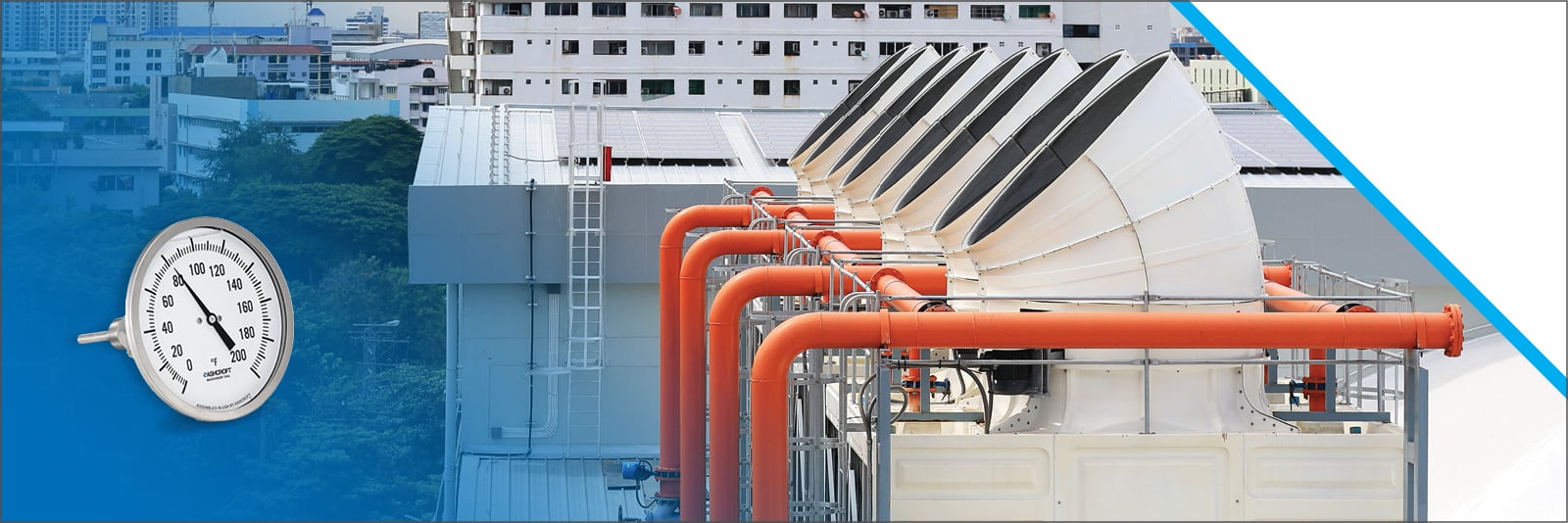
A bimetal thermometer provides a fast, local temperature reading without requiring electrical power or a transmitted signal. Common measurement points include steam headers, condensate return lines, and skid-mounted equipment inspected during operator rounds.
The Ashcroft® EL Bimetal Thermometer is one example. Its silicone-filled design helps reduce pointer flutter caused by vibration near pumps, steam traps and other equipment. Its Everyangle™ connection rotates 360 degrees, allowing the dial to be positioned for visibility regardless of the piping orientation.
A thermowell is required when a bimetal thermometer is installed in a pressurized application, which includes most industrial steam lines. The thermowell separates the sensing element from direct process contact, protects it from corrosion and physical damage, and allows the thermometer to be removed for service or calibration without shutting down the line. This is the temperature-side equivalent of what a steam siphon does for a pressure gauge.
Can temperature switches trigger alarms and shutdowns?
Yes. A temperature switch responds to heat in much the same way a pressure switch responds to pressure. When the process reaches a preset temperature, the switch activates a snap-action microswitch that can initiate a visible or audible alarm, trigger an automatic shutdown or perform both functions with a dual-setpoint configuration.
Ashcroft® T4 and T7 Temperature Switches provide examples of how switch configurations can address different steam-system requirements. The Ashcroft® T4 Temperature Switch has a single setpoint adjustable across its full range. The Ashcroft® LT Series dual-setpoint models provide two independent setpoints, enabling a staged response such as an initial alarm followed by automatic shutdown.
These configurations can support burner controls, boiler safety functions, and high-temperature process interlocks.
Two additional considerations are particularly important in steam service:
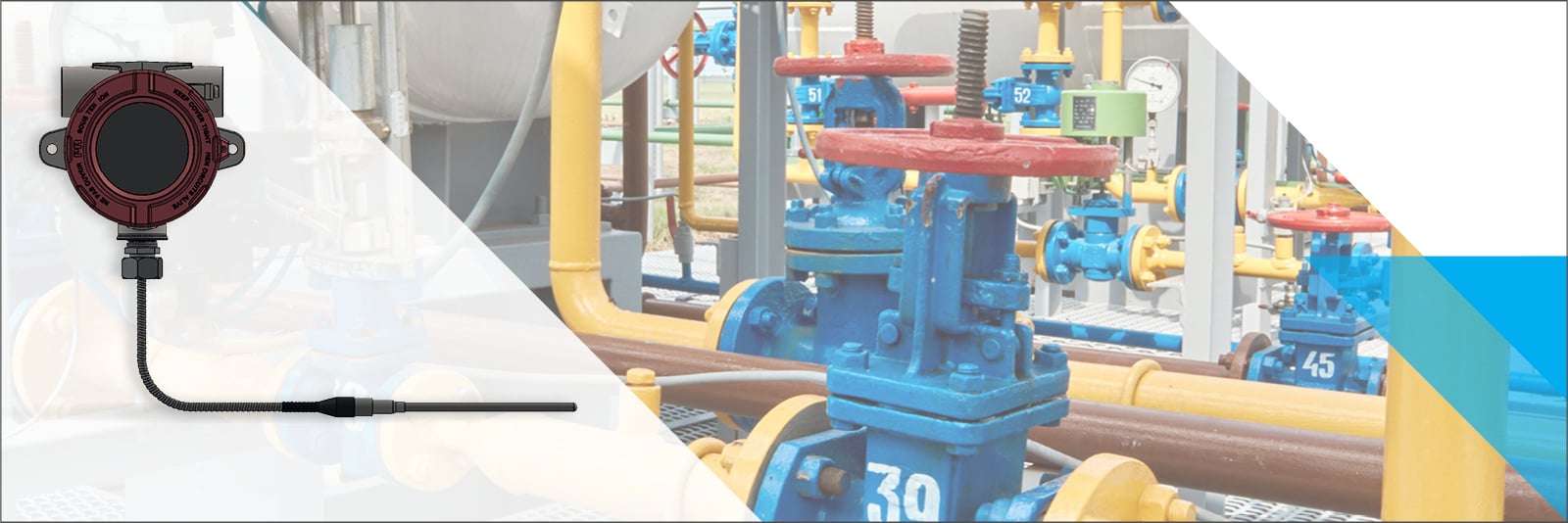
- Hazardous-location protection: The Ashcroft® T7 is explosion-proof and SIL 3 capable, making it suitable for certain Class I, Division 1 locations found near boiler rooms and chemical processing systems.
- Distance from the process: A temperature switch installed on hot steam piping may need to be separated from the process connection to protect the switch housing from excessive heat.
The T7 remote-mount configuration is available with capillary lengths greater than 25 feet. This allows the sensing bulb to remain at the hot measurement point while the switch body is installed in a cooler, more accessible location.
How do temperature instruments compare for steam service?
| Instrument | Primary function | Typical temperature range | Output | Best-fit steam application |
|---|---|---|---|---|
| RTD | Continuous process measurement with high precision | -196 °C to 600 °C | 2-, 3- or 4-wire RTD output or 4 to 20 mA | Boiler headers, saturated steam and moderate superheat |
| Thermocouple | Continuous process measurement across a wide range | -200 °C to 1,200 °C for Type K | Thermocouple output signal or 4 to 20 mA | Superheated steam, flue gas and extreme process heat |
| Bimetal thermometer | Local visual indication | -40 °F to 750 °F, depending on model | Mechanical dial with no power required | Steam headers, condensate lines and operator rounds |
| Temperature switch | Alarm and shutdown control | -40 °F to 750 °F, depending on model | SPDT or DPDT switch contact | Burner interlocks, high-temperature alarms and boiler safety controls |
How do you protect temperature instruments from steam’s heat and pressure?
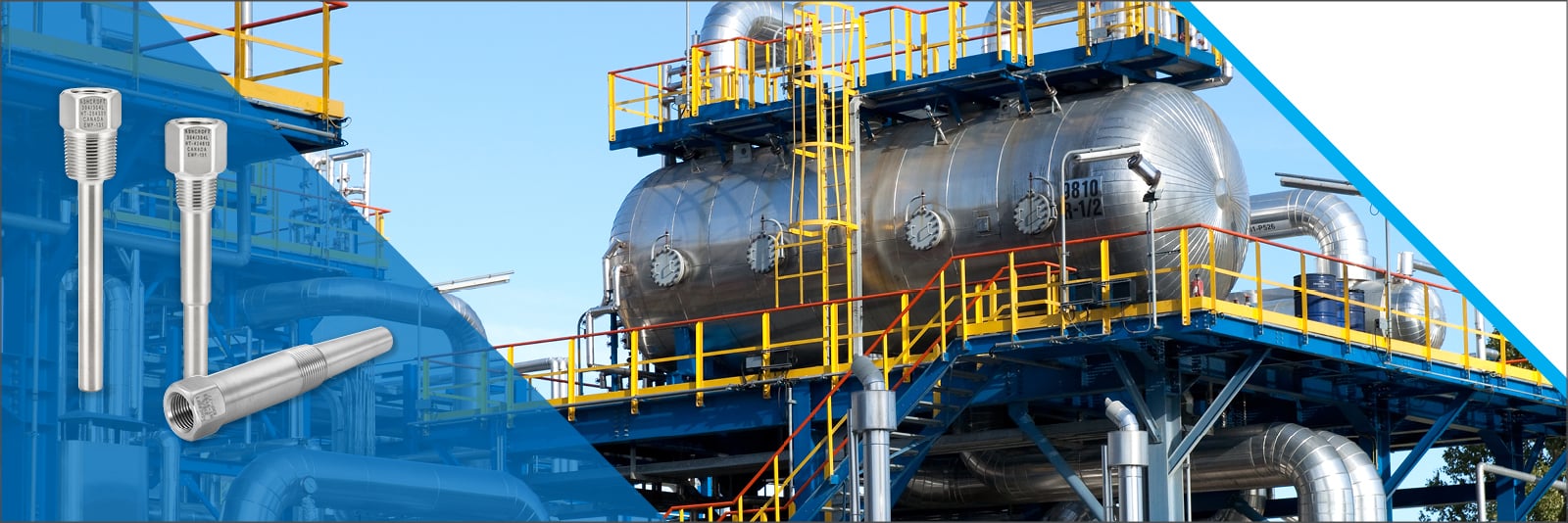
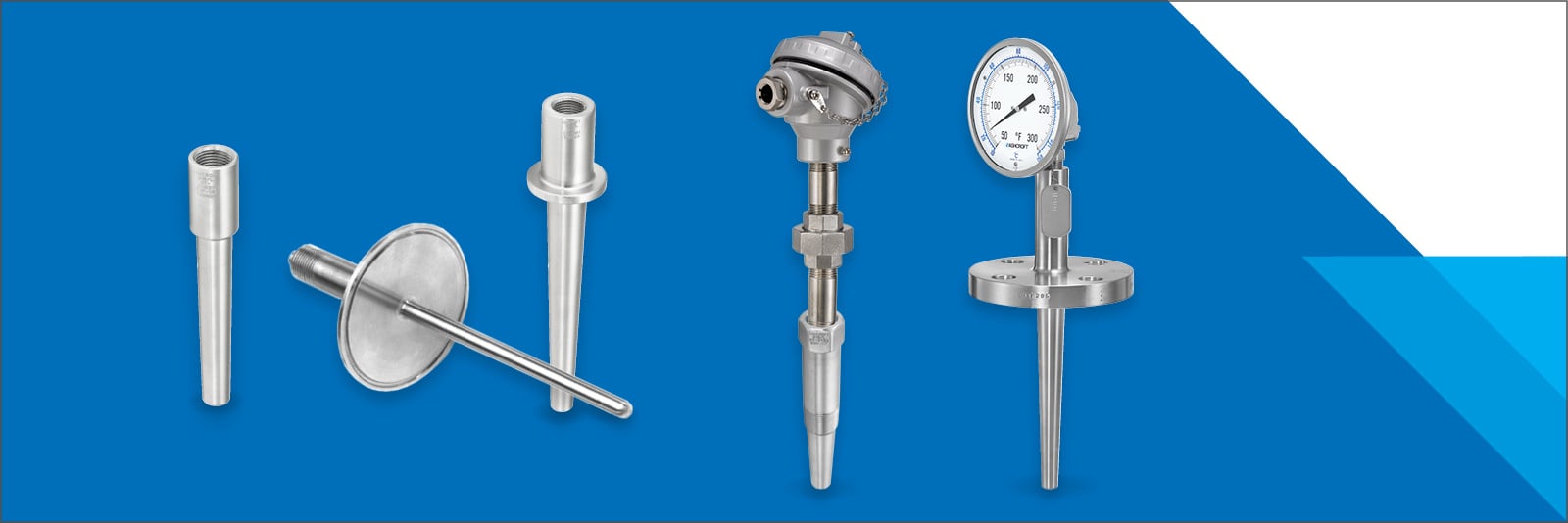
A thermowell is one of the most important accessories for temperature instruments used in pressurized steam service. It separates the sensing element from direct process contact, protecting the instrument from corrosion, erosion, and the physical stress caused by thermal cycling. It also allows the instrument to be removed, replaced or calibrated without draining the system or shutting down the process.
Thermowell material selection is equally important. Stainless steel is commonly used in steam applications because it can withstand high temperatures and exposure to condensate. However, material compatibility should always be confirmed based on the specific process conditions. Refer to our Material Selection Guide to learn more.
Insertion length must also match the pipe size and installation. Proper insertion places the sensing tip within the active flow, where it can measure representative process temperature instead of the cooler boundary layer near the pipe wall.
Key Takeaways
- Saturated steam temperature is determined by pressure. Review the system’s position on the pressure-temperature curve before selecting an instrument range.
- RTDs provide accuracy and repeatability for saturated and moderately superheated steam, while thermocouples accommodate higher superheat and extreme process temperatures.
- Bimetal thermometers provide fast, local readings without requiring power. Pressurized steam installations will also require a thermowell.
- Temperature switches can initiate alarms and shutdowns. Remote-mount configurations help protect the switch body from excessive process heat.
- A properly specified thermowell protects the temperature instrument, supports reliable measurement, and allows servicing without shutting down the process.
Learn More
If you have specific questions about selecting temperature instruments for your steam application, check out the additional resources below, or contact us to speak to a product expert. In the meantime, download our guide to see our full line of temperature measurement solutions.