

Subscribe now and get the latest blog posts delivered straight to your inbox.
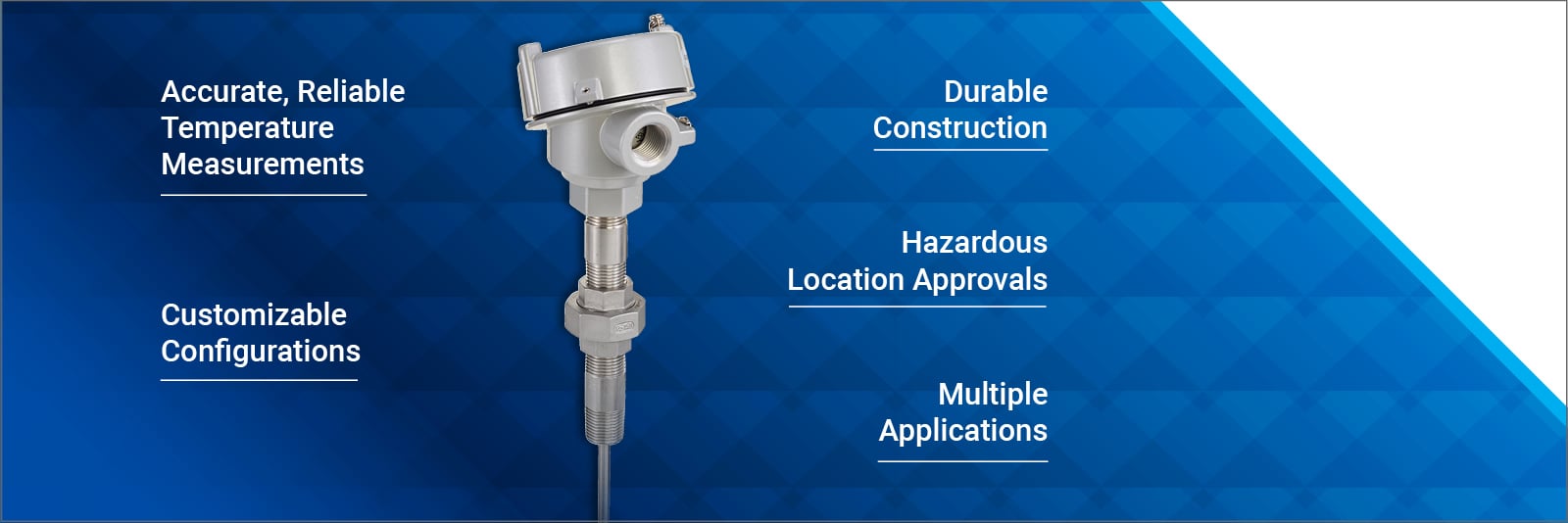
Temperature sensors are critical to maintain safe, efficient and reliable industrial processes, and the most important features of these devices determine how well they perform in real-world applications. From hazardous location approvals to configurable designs and durable construction, understanding these features helps ensure the right sensor is selected for the environment, accuracy requirements and operational demands.
Among the most common temperature sensors used in industrial environments are resistance temperature detectors (RTDs) and thermocouples, each offering unique advantages depending on the application.
Read this article to learn what features matter most when selecting RTDs and thermocouples and how they impact performance across different applications.
What are the key differences between RTDs and thermocouples?
RTDs and thermocouples differ primarily in how they measure temperature and how they perform in different environments.
-
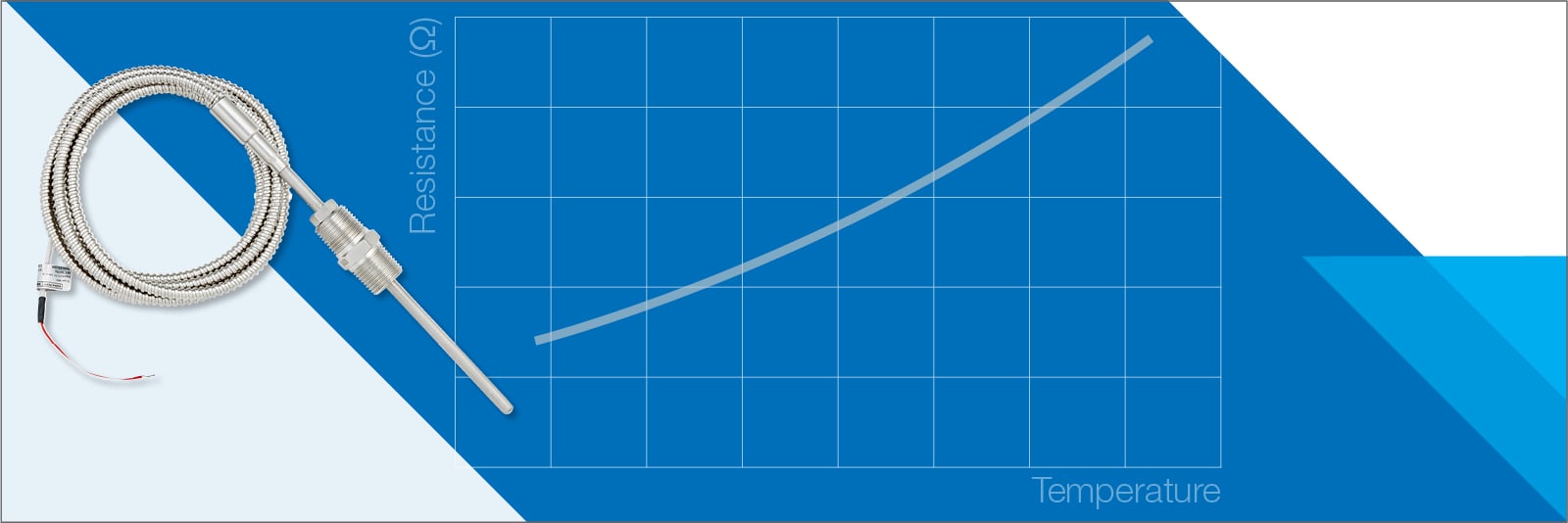
RTDs measure temperature by detecting changes in electrical resistance (ohms)
-
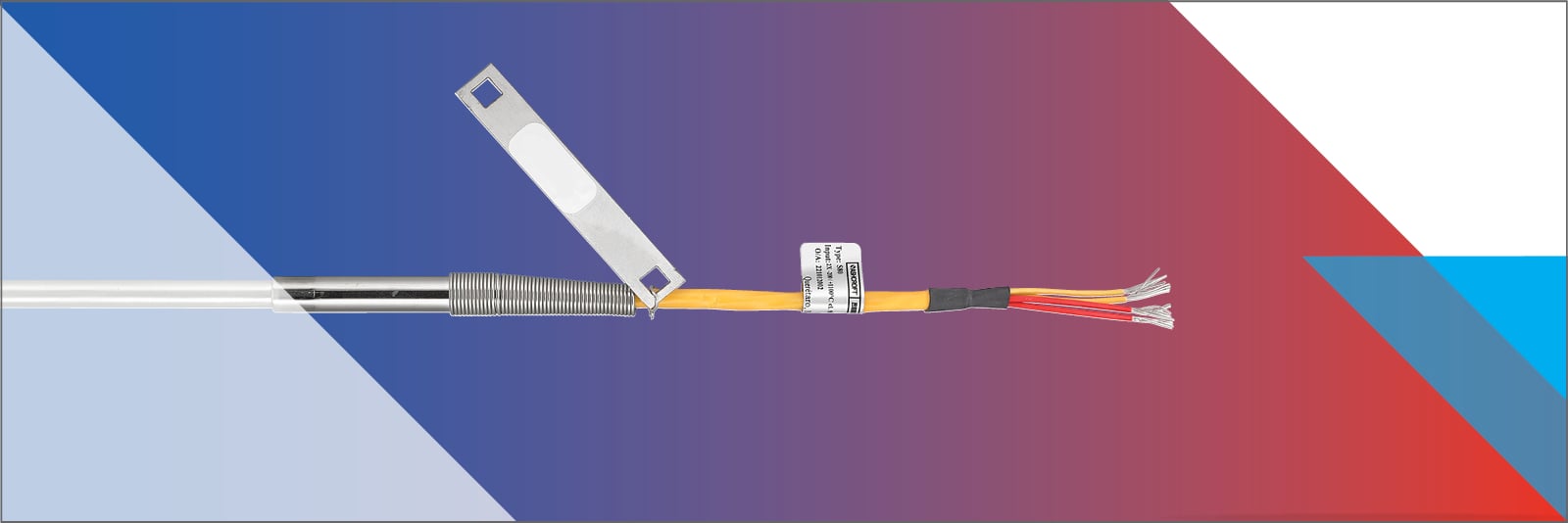
Thermocouples generate a millivolt signal based on temperature differences
Because of this:
-
RTDs provide higher accuracy and stability
-
Thermocouples offer faster response times and wider temperature ranges
Understanding these differences helps ensure the right sensor is selected based on application requirements.
What to look for in an RTD or Thermocouple
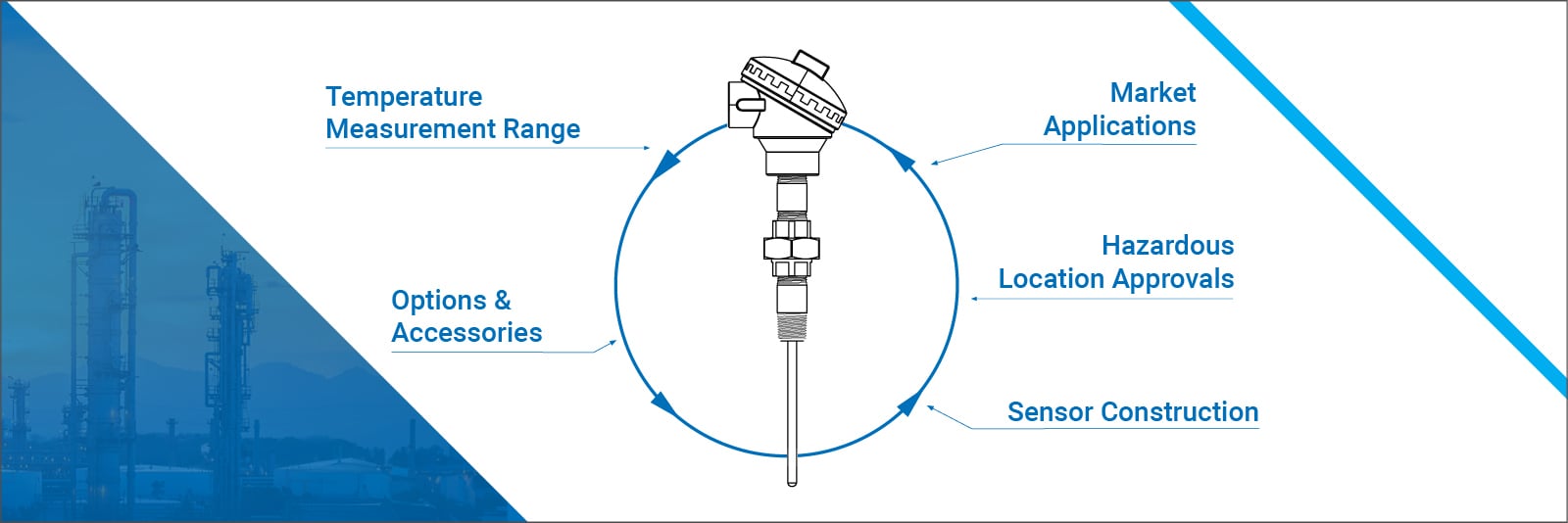
When selecting an RTD or thermocouple, it is important to evaluate key performance features such as hazardous location approvals, durability, accuracy, response time and configuration flexibility.
Each of these factors directly impacts safety, reliability and overall system performance, making them essential considerations in industrial temperature measurement:
Why are hazardous location approvals critical for temperature sensors?
Using fully certified assemblies helps ensure compliance, reduce risk and protect both personnel and equipment in Hazardous locations. These approvals ensure RTDs and thermocouples can operate safely in environments where flammable gases, vapors or dust are present. In these applications, sensors must meet certification standards such as FM, ATEX and IECEx to confirm they are safe for use in classified areas.
Industrial temperature assemblies are designed with certain protection methods that are needed, depending on the application:
-
Explosion-proof or flame proof. This means containing a defined explosion, as these enclosures have specially designed flame paths, which allows the internal explosion to vent without a flame escaping the enclosure.
-
Intrinsically safe. This protection method limits the energy supplied to an instrument using an approved barrier so it cannot ignite a hazardous atmosphere. The barrier acts as a buffer between hazardous and non-hazardous locations. This is the safest and only approved method for Zone 0 applications.
-
Nonincendive. This method involves limiting the energy that is applied to an instrument to prevent an explosion from occurring without the use of a barrier. This can only be used in division 2 hazardous areas.
How does durable construction improve sensor reliability?
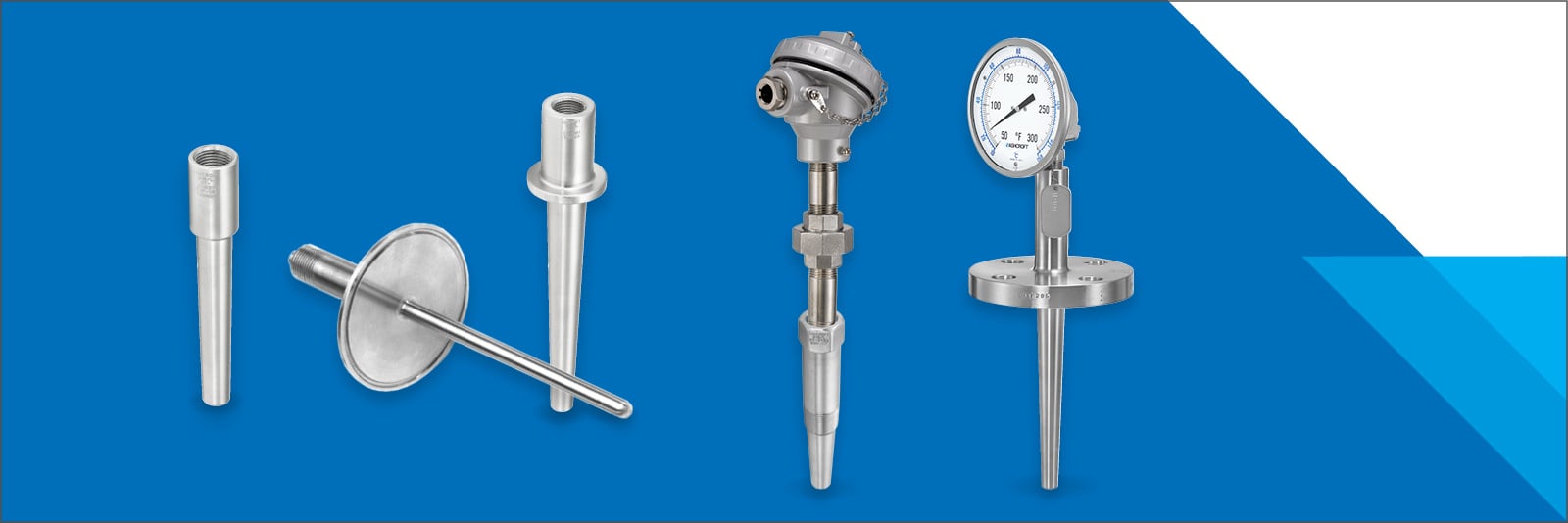
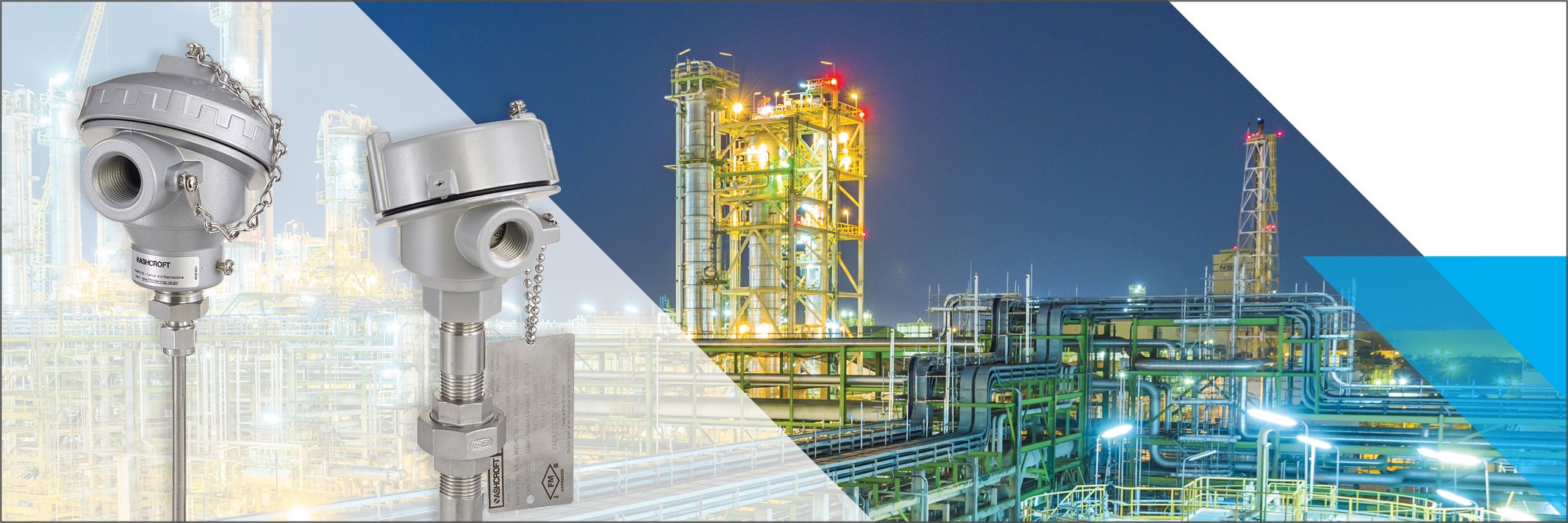
Durable construction ensures RTDs and thermocouples can withstand harsh industrial environments, including vibration, pressure and corrosive media. For example, the Ashcroft® S50 Industrial RTD and S50 Industrial Thermocouple are built with stainless steel or Inconel® sheaths and use magnesium oxide insulation to protect internal components while maintaining thermal conductivity. In most applications, thermowells are also used to shield the sensors from corrosive media, high pressures and elevated flow rates.
Durability helps extend service life, reduce maintenance and sustain measurement integrity in demanding applications.
Why is customizable configuration important for temperature sensors?
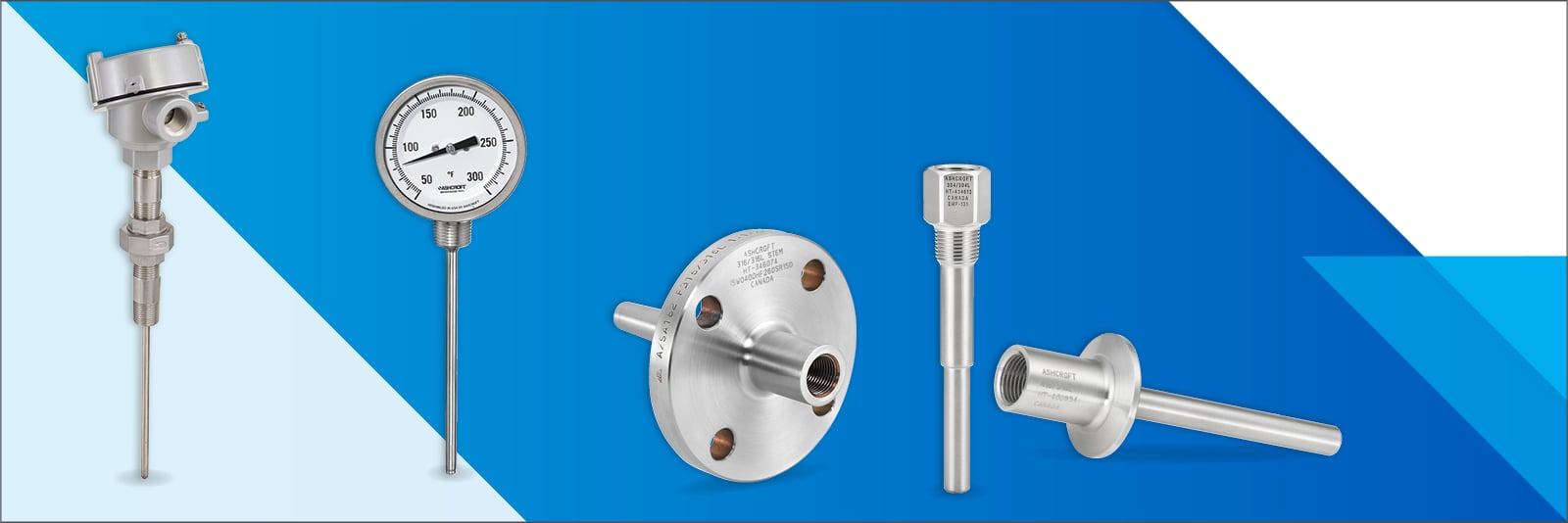
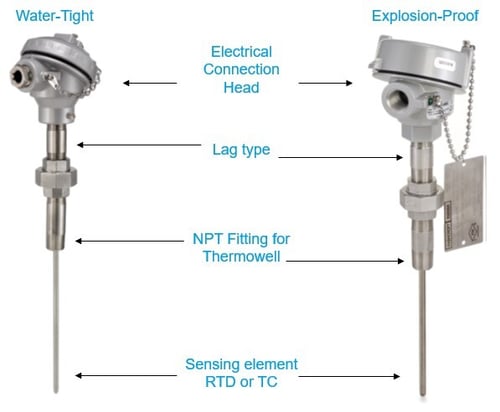
Customizable configurations allow RTDs and thermocouples to be tailored to specific installation and process requirements. Temperature sensor assemblies can be configured with multiple options.
Figure 1. Sensor Assembly Options.
-
Single or dual sensing elements for redundancy
-
Different sheath diameters and insertion lengths
-
Various process connections such as threaded or compression fittings
-
Wiring configurations for RTDS include 2-wire, 3-wire and 4-wire
Figure 2. RTD Wiring Diagram. 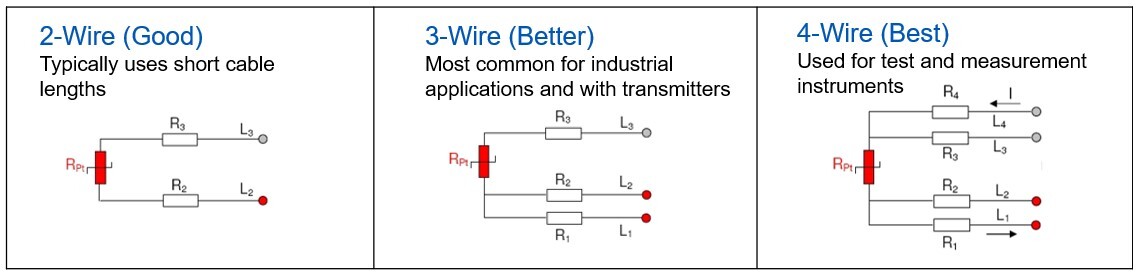
Additional options may include connection heads, transmitters, remote mounting and specialized lead wire insulation. This flexibility ensures proper installation, reliable performance and compatibility with the overall system design.
How does accuracy and stability impact RTD and thermocouple performance?
The accuracy and stability of an instrument are also important factors to consider when selecting an RTD or Thermocouple. They determine how precisely and consistently a temperature sensor measures process temperature over time.
-
RTDs provide high accuracy and excellent long-term stability because they rely on predictable resistance changes in metals such as platinum. They are commonly available in configurations such as Pt100 and Pt1000, which influence signal sensitivity and wiring considerations depending on the application.
-
Thermocouples, while generally less accurate, provide reliable performance across a wider range of conditions. Standards such as IEC 60751 for RTDs and IEC 60584-2 or ASTM E230 for thermocouples define accuracy classes and expected performance.
Selecting the appropriate sensor depends on the level of precision and long-term stability required for the process.
Is response time important for RTDs and thermocouples?
Yes. Response time determines how quickly a temperature sensor reacts to changes in the process, which is critical for maintaining control and protecting equipment.
-
Thermocouples typically offer faster response times due to their simpler construction and smaller sensing junction, making them well suited for applications with rapid temperature fluctuations.
-
RTDs respond more slowly but provide more stable and precise measurements, making them ideal for steady-state processes where accuracy is more important than speed.
Understanding response time requirements helps ensure the sensor can keep up with process conditions.
Why does your application temperature range matter when selecting RTDs vs thermocouples?
Temperature range to be measured determines whether an RTD or thermocouple is suitable for a given application.
-
RTDs are typically used in temperature ranges up to about 600 °C, making them ideal for moderate temperature applications requiring high accuracy.
-
Thermocouples can measure much higher temperatures, often exceeding 1000 °C depending on the type, making them the preferred choice for high-temperature environments.
Selecting the correct sensor based on temperature range ensures both performance and longevity.
Where are RTDs and thermocouples typically used?
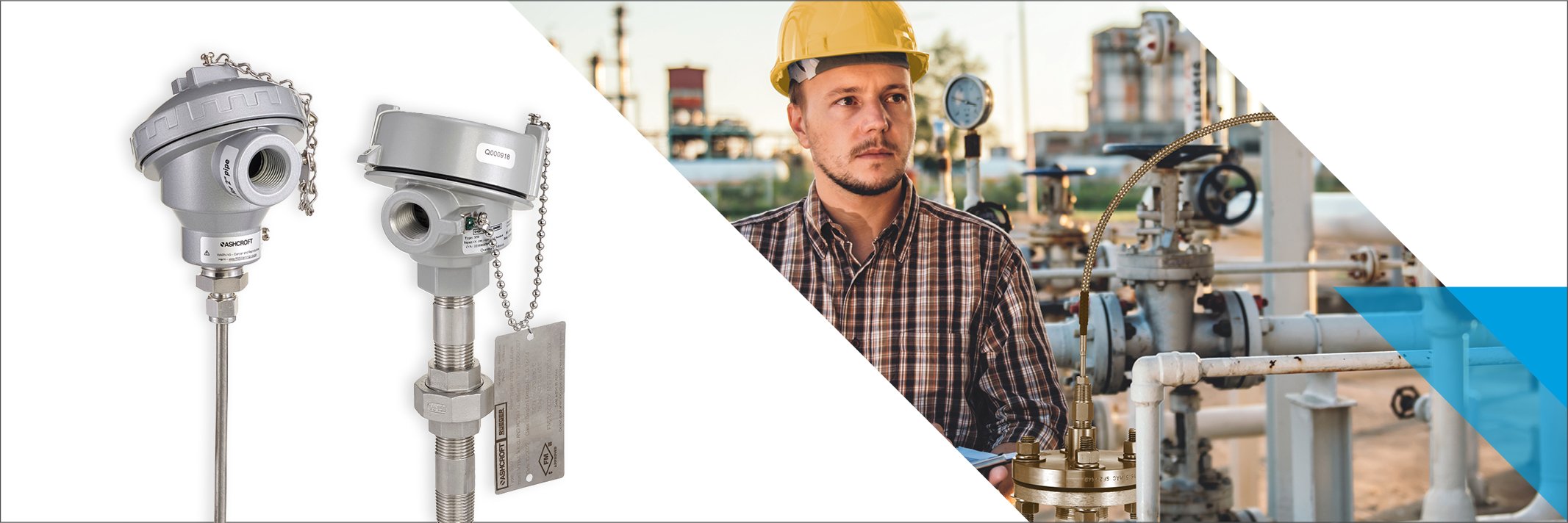
RTDs and thermocouples are used across a wide range of industries due to their adaptability to different process conditions. Common applications include:
-
Oil and gas processing
-
Power generation systems
-
Chemical and petrochemical plants
-
Water and wastewater systems
-
General industrial process control
They can measure temperature in liquids, gases and surface applications, making them essential for monitoring and controlling industrial processes.
How does cost impact RTD and thermocouple selection?
The cost of temperature sensors is an important consideration because it affects both the initial purchase and the total cost of ownership over time.
-
Thermocouples often have a lower upfront cost, which can make them an attractive option for applications where broad temperature range and fast response are the primary priorities.
-
RTDs typically involve a higher initial investment, but they can deliver greater long-term value in applications that require higher accuracy, improved stability and more consistent performance over extended service life.
A complete cost evaluation should go beyond the purchase price alone. It is important to consider:
-
How often the sensor may need to be replaced
-
The level of calibration required to maintain performance
-
The expected long-term reliability in the intended operating environment
In many industrial applications, a sensor with a higher upfront cost may help reduce maintenance demands, minimize process interruptions and support more dependable temperature measurement over time.
Ready to learn more?Selecting the right RTD or thermocouple depends on the application’s temperature range, accuracy requirements, environmental conditions and safety needs. By evaluating key features such as hazardous location approvals, durability, response time and configuration flexibility, you can choose a temperature sensor that supports safe, efficient and reliable industrial processes. To learn more about Ashcroft® temperature instruments, contact one of our product specialists or download our temperature sensor product guide to explore our RTD and thermocouple solutions.
Selecting the right RTD or thermocouple starts by evaluating the key features such as hazardous location approvals, durability, response time and configuration flexibility needed for your specific needs. To learn more about temperature instruments, see related articles below that may interest you
Contact us to speak to one of our product specialists who can answer all of your temperature measurement questions. In the meantime, download our temperature sensor product guide to learn more about our RTD and Thermocouple products.