

Subscribe now and get the latest blog posts delivered straight to your inbox.
Pressure and temperature instrumentation for Phosgene service must minimize leak paths and use chemically compatible materials. This is because Phosgene's toxicity and delayed symptom onset make even small leaks dangerous. Engineers and plant operators specifying instrumentation for Phosgene lines need to know how to measure pressure and temperature on this service without introducing unnecessary risk.
Ashcroft has decades of experience engineering pressure and temperature instrumentation for hazardous and toxic chemical services, including diaphragm seal assemblies built specifically for aggressive media like Phosgene. This article walks through installation methods, diaphragm seal design options, recommended wetted materials, and temperature instrumentation best practices so you can specify a safe, reliable measurement point on Phosgene piping systems.
Why does phosgene service require specialized instrumentation?
Phosgene service requires specialized instrumentation because the chemical is highly toxic, colorless, and produces symptoms that can take hours or days to appear after exposure — making leaks difficult to detect before harm occurs.
- What it is: Phosgene (COCl2) is a heavily regulated chemical due to its harsh toxicity and the lethal nature of exposure.
- Where it's used: Production of plastics such as polycarbonate and polyurethane, as well as agrochemicals, pharmaceuticals, and other specialty chemicals.
- Why it's hard to detect: Exposure symptoms are typically delayed and can take hours or days to set in, and the gas itself is colorless — so a leak can go unnoticed until it has already caused harm.
This combination of toxicity and detection difficulty is why instrumentation on Phosgene lines is held to a higher standard than on typical process piping, starting with how the instruments are physically connected to the system.
What is the best way to install pressure instrumentation for Phosgene?
The best way to install pressure instrumentation for Phosgene is through flanged seal connections rather than threaded NPT connections, because threaded joints create more potential for unintended leak paths.
- Why flanged over NPT: Industrial piping systems for critical services like Phosgene commonly rely on flanged connections to avoid the extra leak paths threaded joints introduce.
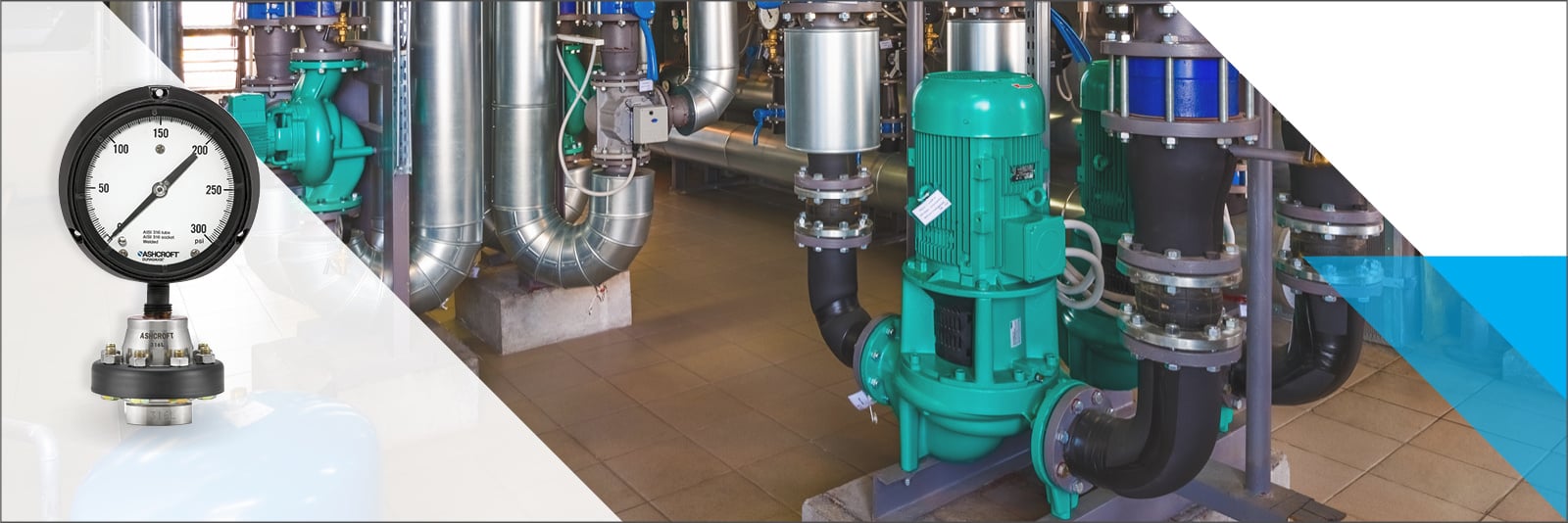
- The gauge challenge: Pressure gauges typically have threaded connections by default, so on Phosgene service they're usually installed with an isolation device called a diaphragm seal instead.
- What diaphragm seals do: They protect the gauge from direct contact with the process media and are available in a wide range of materials and configurations, letting engineers match the seal to the chemical compatibility requirements of the application.
The two broad categories of diaphragm seal design are modular and all-welded. Each one carries very different leak-path risk profiles.
Modular vs. all-welded diaphragm seals: Which is better for Phosgene?
All-welded diaphragm seals are the recommended choice for Phosgene and other critical services, because modular seals introduce more joints where leaks can occur.
Modular seals: Versatile, but more potential leak paths
Modular seals are designed for versatility, allowing manufacturers and approved service technicians to configure special wetted materials as needed for the application. A typical modular seal includes:
- A top housing/diaphragm assembly
- A skirted gasket
- A lower housing
- Clamping rings and hardware
The diaphragm and lower housing are the wetted components and must be made of materials compatible with Phosgene service. While this modular design supports flexible configuration, the multiple components create more potential points for leakage — which is why all-welded designs are recommended for critical services instead.
All-welded seals: The recommended design for critical service
All-welded seals are installed as a single piece rather than assembled from separate parts.
- Construction: The top housing, diaphragm, lower housing (when applicable), and in some cases the flange is all welded together as one unit.
- Design options: There are three all-welded flanged designs available in the industry, each suited to different application constraints.
Here's a quick comparison:
- How it's built: Top housing/diaphragm and lower housing welded together; the flange sits on the top housing and can rotate for instrument orientation.
- Best suited for: Applications needing flexibility in instrument orientation after installation.
- How it's built: Flange/instrument connection welded directly to the diaphragm, which extends over the mating flange's contact point, making the diaphragm the only wetted component.
- Best suited for: Reducing buildup and clogging; minimizing use of exotic materials.
- Trade-off to consider: Diaphragm diameter is tied to pipe size, so smaller pipes (e.g., 1-inch) produce smaller diaphragms that struggle to reliably calibrate pressure spans under 200 psi.
All-Welded Flanged Seal with Internal Diaphragm
- How it's built: Instrument connection/diaphragm assembly welded directly to the flange.
- Best suited for: Smaller pipe sizes and/or smaller pressure spans, since the internal diaphragm diameter isn't limited by pipe size.
How should Phosgene instrumentation be integrated and maintained?
Phosgene instrumentation should be integrated using flanged connections combined with monoflange valves, so instruments can be safely isolated and removed for maintenance without unnecessary downtime or added leak paths.
- Why isolation matters: Instrumentation periodically needs to be removed for maintenance or replacement, so safe isolation and removal practices matter as much as the initial installation — both to minimize downtime and to limit purge and decontamination requirements.
- What monoflanges do: They're commonly used to block, block/bleed, or double block/bleed (isolating both upstream and downstream of the valve) on piping systems that favor flanged connections.
- Connection options: Monoflanges typically have a flanged process connection, while the instrument-side connection can vary between a threaded stem/tap, a transmitter IEC connection, or a flanged connection.
For Phosgene service, the recommended configuration to minimize leak paths is:
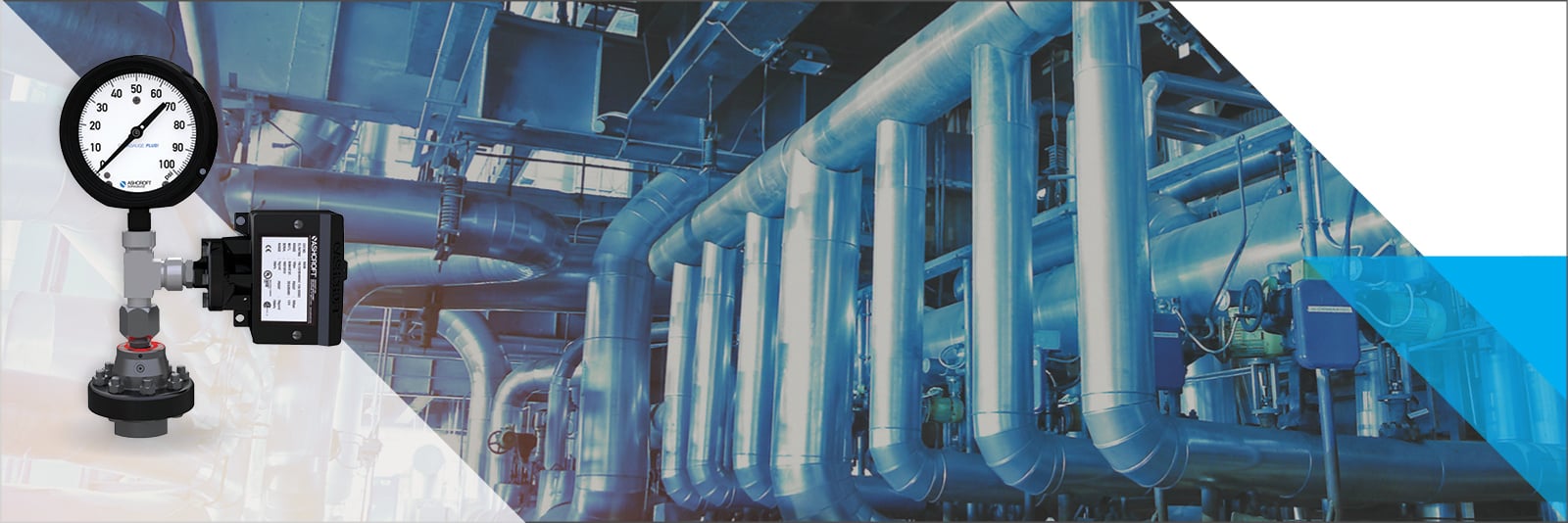
- A mechanical pressure gauge welded to an all-welded flanged diaphragm seal
- Installed to a mating piping flange
- With a wafer-style monoflange valve positioned between the seal flange and the mating flange
Wafer-style monoflanges with bolt holes that match the flanged components allow for consistent, repeatable installation. In contrast, inline wafer designs that fit within the bolt circle (such as flushing rings) carry more risk of misalignment and improper installation and should be avoided where possible.
What wetted materials are recommended for Phosgene diaphragm seals?
The recommended wetted materials for Phosgene diaphragm seals are a tantalum diaphragm paired with either 316L stainless steel or Hastelloy, depending on whether moisture is present in the service.
Diaphragm seal assemblies don't follow the same material selection rules as other piping components like pipes, valves, or fittings. The one component that every diaphragm seal shares is the diaphragm itself. This is the extremely thin membrane that transmits process pressure to a system fill fluid, which in turn drives the instrument. Because of this dynamic, we offer a Material Selection Tool that provides a breakdown of the appropriate material for diaphragms as well as other more substantial components.
Materials you would use with Phosgene:
Pure, Dry Phosgene - Lower housing (if applicable): 316L stainless steel - Diaphragm: Tantalum
Phosgene with Moisture Present - Lower housing (if applicable): Hastelloy B (preferred) or Hastelloy C276 - Diaphragm: Tantalum
- Why moisture changes the material choice: Moisture introduces corrosion concerns that pure, dry Phosgene doesn't present, which is why a Hastelloy lower housing becomes necessary once moisture is a factor.
- Why Hastelloy B is preferred: The combination of water and Phosgene can produce hydrochloric acid, and a tantalum diaphragm paired with a Hastelloy B lower housing is best suited to that environment.
- Flush flange exception: For flush flange seals, which have no lower housing, a tantalum diaphragm alone is sufficient.
What other factors affect diaphragm seal performance and safety?
System fill fluid choice and material validation are the two other key factors affecting diaphragm seal performance and safety on Phosgene service. Cleaning and degreasing wetted components before installation helps maintain a safe, contamination-free assembly.
- Fill fluid: Silicone is recommended over glycerin because its temperature parameters are more favorable for this service. Phosgene piping systems may need periodic purging and decontamination, a process that can involve pulling vacuum — a condition glycerin doesn't handle well, which rules it out as a fill fluid choice.
- Material validation: Material Test Reports (MTR) and/or Positive Material Identification (PMI) testing should be used to confirm that the wetted components are actually built from the specified materials before they go into service.
What temperature instrumentation works best for Phosgene piping?
Flanged thermowells built from Hastelloy B or C276 are the recommended approach for temperature instrumentation on Phosgene piping, since they protect the instrument stem while keeping leak paths to a minimum.
- Common instrument types: RTDs, thermocouples, and bimetal thermometers are all commonly used throughout Phosgene piping systems to provide local or remote temperature indication.
- Consolidate where possible: Using transmitters that also provide a local display reduces the number of access points and potential leak paths in the system.
- Why thermowells matter: All temperature instruments should be installed through a flanged thermowell, which protects the instrument stem from flow, turbulence, and corrosion while minimizing leak paths at the point of integration.
- Why flanged (not welded): Flanging the thermowell into the pipe, rather than welding the flange directly to the pipe, allows the thermowell to be periodically removed and replaced while keeping leak risk to a minimum.
Thermowells for Phosgene service should follow the same material logic as diaphragm seal lower housings:
- Material: Hastelloy C276 or Hastelloy B
- Weld validation: Dye penetrant testing on all thermowell welds
- Mechanical validation: Ultrasonic testing to confirm the flange's mechanical integrity
- Material certification: PMI or MTR per ASME B16.34 / ASTM A10204 3.1 to confirm the material used matches specification
Ready to learn more?
Ashcroft offers a full line of all-welded diaphragm seals engineered for critical and toxic services like Phosgene. Contact us to speak with a product expert or see the related resources below to answer additional questions you may have.