

Subscribe now and get the latest blog posts delivered straight to your inbox.
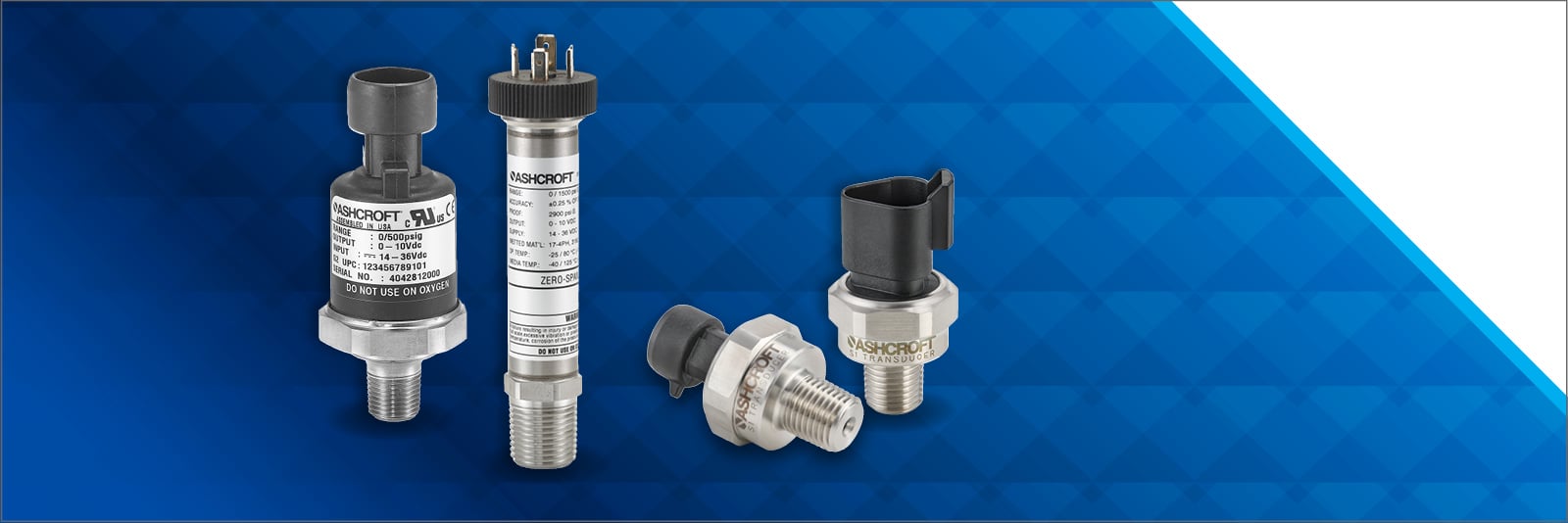
Proper pressure transmitter and transducer installation is critical for achieving accurate, stable and long-lasting measurement. Before installing a pressure sensor, evaluate pressure range, media compatibility, output signal, environmental conditions and mounting requirements.
During installation, factors such as vibration, temperature, orientation, fittings and electrical connections all influence performance. Read this article to learn how to properly install a pressure sensor, what factors affect performance and how to avoid common installation mistakes.
What should you check before installing a pressure transmitter or transducer?
At a minimum, your pre-installation assessment should confirm the instrument's pressure range, pressure media, output type, regulatory approvals and accuracy. Skipping this step can lead to inaccurate readings, premature failure or safety risks.
Here’s what you'll focus on:
1. Pressure range and pressure spikes
Select a pressure sensor where normal operating pressure is about 60% to 70% percent of full scale. This provides margin for system fluctuations and helps protect against overpressure.
In applications with pressure spikes, such as positive displacement pumps or fast-acting valves, high-frequency pressure events can damage the sensing element. These sudden pressure events can exceed normal operating limits even if average pressure remains within range.
In these cases, verify proof pressure and containment ratings and consider accessories such as pressure snubbers or pulsation dampeners.
2. Media compatibility
Confirm that all wetted parts are compatible with the process media. Many pressure sensors use oil-filled diaphragms to transmit pressure. These fill fluids, often silicone-based, may not be suitable for certain media such as oxygen or reactive fuels.
Material incompatibility can lead to corrosion, contamination or hazardous reactions, making verification essential during selection. For a quick check, you can refer to this online Material Selector Tool.
3. Output signal selection
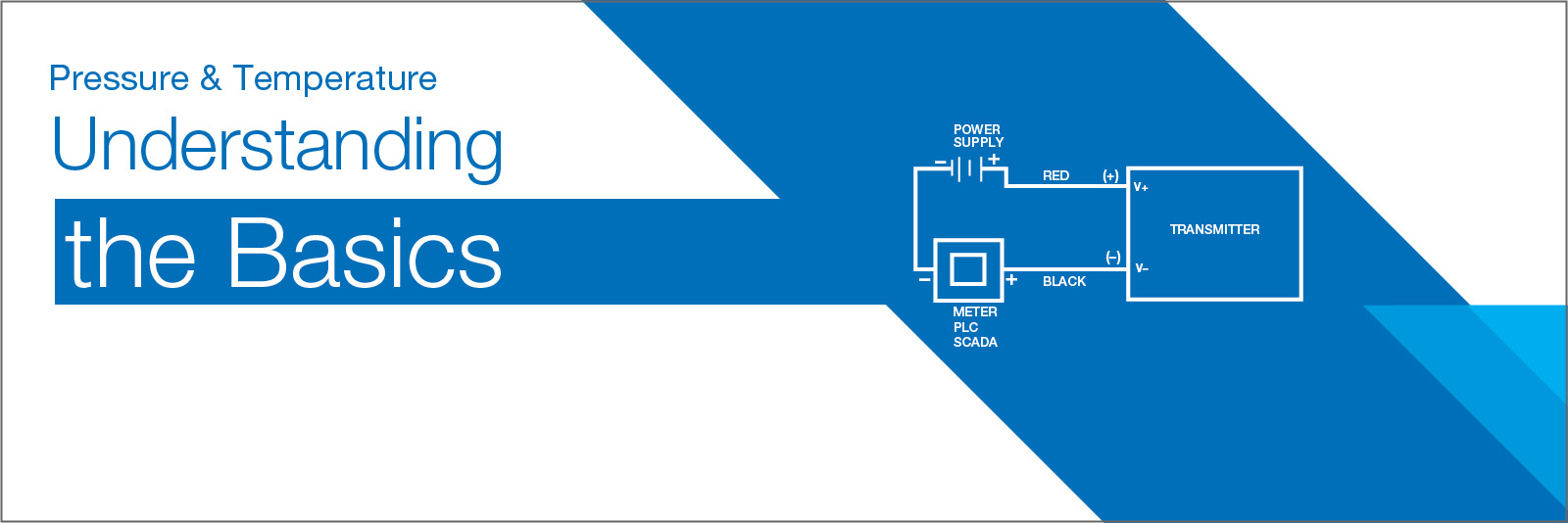
The output signal of your sensor must match the control system, cable length and electrical environment of your application. Pressure sensors, including transmitters and transducers, convert pressure into an electrical signal, such as voltage or current, that a controller can interpret. For example,
-
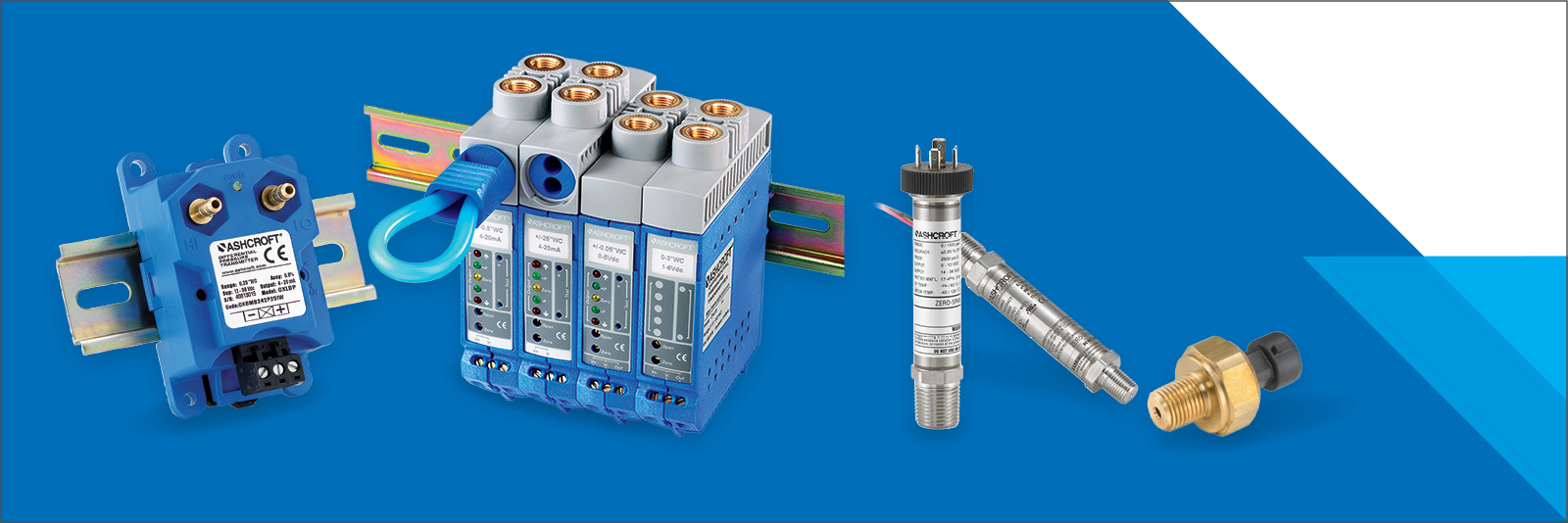
The Ashcroft® G2 Pressure Transducers can offer a 4–20 mA current output.
-
The Ashcroft® E2 Pressure Transducer can offer a 0–5 V voltage output.
Each signal type behaves differently depending on electrical noise, transmission distance and power stability.
-
Voltage signals can be affected by noise and voltage drop over long cable runs.
-
Current signals, such as 4 to 20 mA, are more resistant to interference and better suited for longer distances.
-
Ratiometric outputs scale with supply voltage, which helps maintain accuracy in systems with unstable power.
4. Regulatory approvals and protection types
Pressure sensors used in hazardous or regulated environments must meet specific certifications.
Figure 1. Pressure Sensor Approvals
| Approval | What it Means | Where it Applies |
| FM (Factory Mutual) | Certifies equipment for hazardous locations | North America |
| CSA (Canadian Standards Association) | Verifies safety and performance | Canada |
| UL (Underwriters Laboratories) | Electrical safety certification | United States |
| ATEX | Directive for explosive atmospheres | Europe |
You must also select the appropriate protection method based on the installation environment.
Figure 2. Hazardous Location Protection Options
| Protection Type | Definition | Typical Use |
| Intrinsically Safe (IS) | Limits electrical energy to prevent ignition | Low-power hazardous areas |
| Explosion Proof / Flameproof | Contains internal ignition within enclosure | High-risk environments |
Using the wrong approval or protection method can create safety risks or result in non-compliance with local regulations.
5. Accuracy and temperature effects
Accuracy should be evaluated across both ambient and process temperature ranges. Pressure sensors are specified with a compensated temperature range, which defines where accuracy is maintained. Operation outside this range can introduce additional measurement error.
Changes in process temperature can also influence performance, especially in dynamic systems where temperatures fluctuate.
Use the checklist to confirm your sensor is properly specified before installation.
Figure 3. Pressure Sensor Pre-installation Checklist
| Parameter | What to Confirm | Why it Matters |
| Pressure Range | 60–70% of full scale | Allows for spikes and excursions |
| Pressure Spikes | Proof and burst ratings | Sensor damage or drift |
| Media Compatibility | Wetted materials and fill fluid | Prevents corrosion or reaction |
| Output Signal | Matches system and environment | Ensures signal integrity |
| Approvals | FM, CSA, UL, ATEX | Meets regulatory requirements |
| Temperature | Compensated vs operating range | Maintains accuracy |
Where should you install a pressure sensor for best performance?
Pressure sensors should be installed in locations that minimize exposure to vibration, high temperature and high humidity.
These environmental factors can affect both measurement accuracy and long-term reliability.
-
Vibration and shock. Vibration can introduce mechanical stress and cause unstable output signals over time. Mounting a sensor on unsupported tubing can amplify vibration and increase acceleration beyond tested limits. This can reduce sensor life and impact performance. Both the mounting method and the electrical connection should be considered when evaluating vibration exposure.
- High temperature. When process media is at an elevated temperature, a capillary line or pigtail siphon can be used to reduce the temperature before it reaches the sensor. The operating temperature range of the sensor must be verified for both continuous and transient conditions. For measurement accuracy, the compensated temperature range should also be considered.
- High humidity. In high humidity environments, there is a risk of condensation forming inside the sensor. This can be minimized through appropriate electrical connections and sensor design, particularly in applications where the pressure reference is atmospheric.
What are the key mechanical installation considerations?
Proper mechanical installation ensures the pressure connection seals correctly and prevents damage to the sensor’s internal sensing element (diaphragm), which responds to pressure changes and directly influences measurement accuracy. Here are some key considerations:
1. Pressure fittings and sealing methods. The pressure fitting must meet the pressure requirements of the application, including containment.
-
Tapered threads - sealing occurs at the threads and may rely on only a few engaged turns due to tolerances.
-
Straight threads - require sealing elements (O-rings or washers) that must be compatible with the media.
-
Metal-to-metal - sealing surfaces require clean conditions and proper torque to ensure a reliable seal.
Figure 4. Common Pressure Connections and Sealing Methods
| Connection Type | Sealing Method | Key Consideration | Risk |
| NPT (tapered) | Threaded | Limited thread engagement | Leakage |
| Straight thread | O-ring or washer | Material compatibility | Seal failure |
| Metal-to-metal | Surface contact | Cleanliness and torque | Improper seal |
2. Electrical installation practices. Electrical connections play a critical role in maintaining signal accuracy and stability.
-
Shielding and grounding. Shielding and grounding help reduce the effects of electromagnetic interference (EMC) and radio frequency interference (RFI). Check whether the cable shield is connected to the sensor body to determine the appropriate grounding method at the control system. Proper grounding helps minimize the risk of ground loops and signal noise.
-
Cable routing. Proper cable routing helps maintain signal integrity and reduces the potential for measurement error. Avoid routing cables near sources of electrical noise such as motors, variable frequency drives, welding equipment or switching devices.
Application example: Engine or mobile equipment installation
In applications such as engine compartments or mobile hydraulic systems, pressure sensors may be exposed to multiple stress factors at once, including vibration, temperature cycling and electrical noise.
These conditions make proper installation critical to maintaining performance. Mounting location, thermal management and signal selection should all be considered together to ensure reliable operation.
Ready to learn more about ensuring safe installation of pressure transmitters and transducers?
Now you know the primary factors that will ensure your pressure transmitter or transducer are installed safely and how installation directly influences measurement accuracy, reliability and service life. Ashcroft has decades of experience helping engineers specify and install pressure instrumentation across demanding applications.
For more information about pressure sensors, check out the related resources below, or contact us to speak to a product expert. In the meantime, download our guide to learn how to avoid common mistakes when selecting pressure sensors.