

By:
Paul Francoletti
Director of Product Sales – Mechanical
Published on:
October 19th, 2026
Topics:
Subscribe now and get the latest blog posts delivered straight to your inbox.
By:
Paul Francoletti
Director of Product Sales – Mechanical
Published on:
October 19th, 2026
Topics:
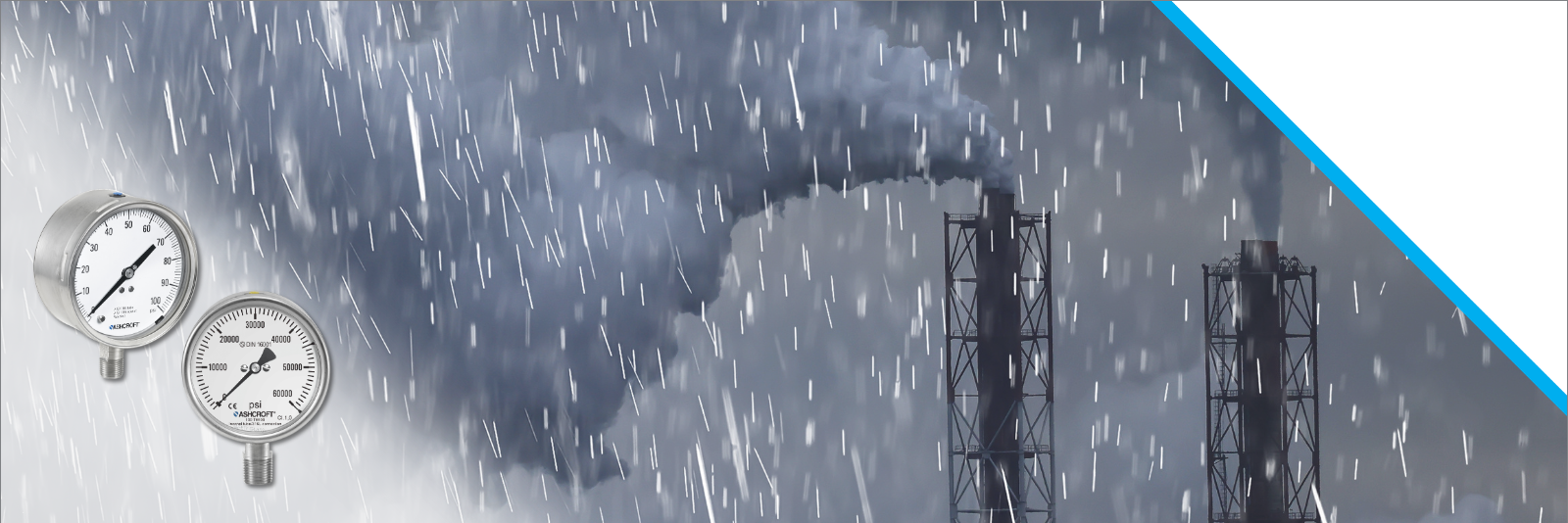
Environmental conditions such as extreme temperatures, corrosive atmospheres, chemical exposure, steam and moisture can affect pressure gauge accuracy, reliability and service life. Selecting the right gauge requires evaluating not only the pressure being measured but also the conditions surrounding the instrument.
A pressure gauge may be properly specified for its operating pressure and process media but still experience premature wear or failure if its case, window, seals or other components are not suited to the installation environment.
Read this article to learn:
- How ambient temperature affects pressure gauge performance
- Why marine and corrosive environments require special consideration
- How chemical exposure and washdowns affect gauge selection
- What to consider when gauges are exposed to steam
- How ingress protection ratings help guide selection
- What to evaluate when selecting a gauge for harsh environments
How does ambient temperature affect pressure gauge performance?
Ambient temperature refers to the temperature surrounding the gauge, which may differ significantly from the temperature of the process media. Extreme ambient temperatures can affect pressure gauge accuracy, internal components and service life. Both high and low temperatures should be considered, particularly for outdoor installations or equipment operating near heat sources.
Several conditions can influence performance:
- High temperatures: Excessive heat can affect measurement accuracy, accelerate component deterioration and change the properties of case-fill fluids.
- Low temperatures: Extreme cold can reduce the flexibility of certain seals and increase the viscosity of fill fluids, potentially affecting pointer response.
- Temperature fluctuations: Repeated changes between hot and cold conditions can contribute to condensation and place additional stress on components.
Temperature limits vary depending on the gauge's construction and fill fluid. The table below provides general guidance for Ashcroft pressure gauges. Always consult the specific product datasheet to confirm operating limits.
Figure 1. General ambient temperature limits for Ashcroft pressure gauges
| Gauge configuration | Ambient temperature range |
|---|---|
| Dry | -20°F to 200°F (-29°C to 93°C) |
| PLUS!™ Performance | -40°F to 150°F (-40°C to 66°C) |
| Glycerin-filled | 20°F to 150°F (-7°C to 66°C) |
| Silicone-filled | -40°F to 150°F (-40°C to 66°C) |
| Halocarbon®-filled | -40°F to 150°F (-40°C to 66°C) |
Actual temperature limits vary by gauge model and configuration.
What should you look for?
Review the manufacturer's specified ambient temperature range and consider conditions throughout the year.
- Liquid-filled gauges: Select a fill fluid with temperature characteristics appropriate for the application.
- High-temperature environments: If the gauge is near boilers, furnaces or other heat sources, consider whether relocating the instrument or adjusting its mounting arrangement could reduce exposure.
The key is to evaluate the temperature at the gauge itself, not simply the general temperature of the facility.
For additional information, read How Does Temperature Affect Pressure Gauge Performance?.
How do marine and corrosive environments affect pressure gauges?
Marine and corrosive environments can cause pressure gauge components to deteriorate, particularly when exposed to salt spray, high humidity or corrosive airborne substances. These conditions are common in coastal facilities, offshore installations, wastewater treatment plants and certain chemical processing operations.
Corrosion can affect several components, including:
- Cases and external hardware: Salt spray and corrosive atmospheres can cause rust, pitting or deterioration of cases, fasteners and fittings.
- Process connections: Corrosion at threaded connections can affect their condition and potentially contribute to leakage.
Why does material selection matter?
The gauge's case and external components should be compatible with the surrounding environment. Stainless steel is commonly used where greater corrosion resistance is needed, although the appropriate grade depends on the exposure.
Galvanic corrosion is another consideration. It can occur when dissimilar metals are electrically connected in the presence of an electrolyte, such as saltwater. Material compatibility may therefore need to be evaluated across the entire installation, including connections and adjacent components.
Selection tip: For marine or coastal applications, evaluate salt spray, humidity, case materials and the compatibility of connected components.
For more information, read Protecting Pressure Instruments from Galvanic Corrosion.
How can chemical exposure and washdowns damage pressure gauges?
Chemical exposure and industrial washdowns can damage pressure gauges when their materials are not compatible with chemicals used in the surrounding environment.
It is important to distinguish between two types of exposure:
- Process media exposure: Wetted components, including the sensing element and process connection, must be compatible with the chemicals being measured.
- External chemical exposure: The case, window, seals and other exposed components must withstand cleaning agents, chemical splashes or corrosive vapors.
A gauge may be compatible with the process media but still experience damage from chemicals used during routine cleaning.
What should you consider in washdown environments?
The cleaning process can be just as important as the chemicals themselves.
- Chemical compatibility: Identify cleaning agents, sanitizers and other chemicals that may contact the gauge. Incompatible materials may experience corrosion, cracking or deterioration.
- Washdown frequency: Repeated cleaning cycles can accelerate wear, especially with prolonged chemical exposure.
- Water pressure and spray direction: Hose-directed sprays and high-pressure cleaning place additional demands on case construction and sealing.
- Cleaning temperature: Hot water and cleaning solutions may expose the instrument to temperatures above normal ambient conditions.
Selection tip: Check that the gauge's ingress protection rating is appropriate for the washdown conditions. A gauge suitable for occasional water splashes may not withstand frequent hose-directed cleaning or high-pressure washdowns.
For more information about wetted material compatibility, read Is Your Pressure Gauge Safe for Chemical Applications?.
What should you consider when pressure gauges are exposed to steam?
Steam exposure can subject pressure gauges to high temperatures that affect measurement performance or damage components. The selection considerations depend on whether steam contacts the outside of the gauge or flows through its process connection.
External steam exposure
A gauge installed near steam piping, valves or equipment may be exposed to steam released during operations, cleaning or maintenance. Direct or repeated exposure can subject the case, window and seals to elevated temperatures.
Consider the location of nearby steam sources, the frequency of exposure and whether relocating or shielding the gauge could reduce the risk of damage.
High-temperature steam service
When a gauge measures steam pressure directly, process temperature becomes an additional concern. For saturated steam, temperature increases as pressure increases. As a result, the gauge may experience temperatures substantially higher than the surrounding air.
A steam siphon is commonly used in suitable applications to reduce the temperature reaching the gauge. It retains condensate, creating a barrier between hot steam and the instrument.
Selection tip: Determine whether the concern is external steam exposure, high-temperature process media or both. The solution may involve gauge placement, temperature-rated components or an appropriate accessory.
What ingress protection rating does a pressure gauge need?
The appropriate ingress protection rating depends on the dust, moisture and water exposure a pressure gauge will encounter. Selecting the right rating helps reduce the risk of contaminants entering the case and affecting performance.
Ingress Protection (IP) ratings use two digits:
- First digit: Indicates protection against solid objects, including dust.
- Second digit: Indicates protection against water under specified test conditions.
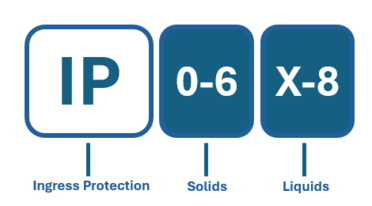
For example, the Ashcroft® 1209 Pressure Gauge has a IP65 rating, indicating a dust-tight enclosure with protection against water jets.
How do IP and NEMA ratings differ?
Both rating systems address environmental protection, but they evaluate different characteristics. IP ratings focus on dust and water ingress, while certain NEMA ratings also address corrosion resistance.
- NEMA 4: Protection against windblown dust, rain, splashing water and hose-directed water.
- NEMA 4X: Similar protection, with additional corrosion resistance for environments such as marine or chemical processing facilities.
The Ashcroft® T6500 Pressure Gauge is an example of a NEMA 4X-rated instrument.
Selection tip: Match the gauge's published rating to actual installation conditions. A gauge suitable for rain or occasional splashes may not withstand frequent washdowns or corrosive exposure.
For a detailed comparison, read Ingress Protection and NEMA Ratings for Pressure Gauges.
How do you select a pressure gauge for challenging environmental conditions?
Selecting a pressure gauge for a demanding environment begins with identifying the conditions it will encounter and matching them to appropriate materials, construction and protective features.
The following checklist summarizes the key considerations.
Table 2. Environmental factors to evaluate when selecting a pressure gauge
| Environmental factor | What to evaluate |
|---|---|
| Ambient temperature | Temperature extremes, fluctuations and fill-fluid compatibility |
| Marine and corrosive exposure | Salt spray, humidity, case materials and connection compatibility |
| Chemical exposure | Chemical types, concentrations and external material compatibility |
| Washdown procedures | Cleaning frequency, water pressure, temperature and ingress protection |
| Steam exposure | External steam, process temperature, gauge placement and accessories |
| Dust and moisture | IP or NEMA ratings and case construction |
Consider these conditions together rather than individually. For example, a gauge installed at a coastal chemical processing facility may experience salt spray, high humidity, chemical exposure and frequent washdowns.
Environmental conditions should also be evaluated alongside operating pressure, process media compatibility, vibration, pulsation and installation requirements.
Ready to learn more?
Selecting the right pressure gauge involves more than matching an instrument to a pressure range. Understanding the surrounding environment can help you choose materials, case construction and accessories that support reliable performance over time.
If you have questions about environmental conditions affecting your application, explore the related resources below or contact us to speak with an Ashcroft product expert for guidance.
In the meantime, download guide to learn more about common causes of instrument failure and how to address them.
Topics: